


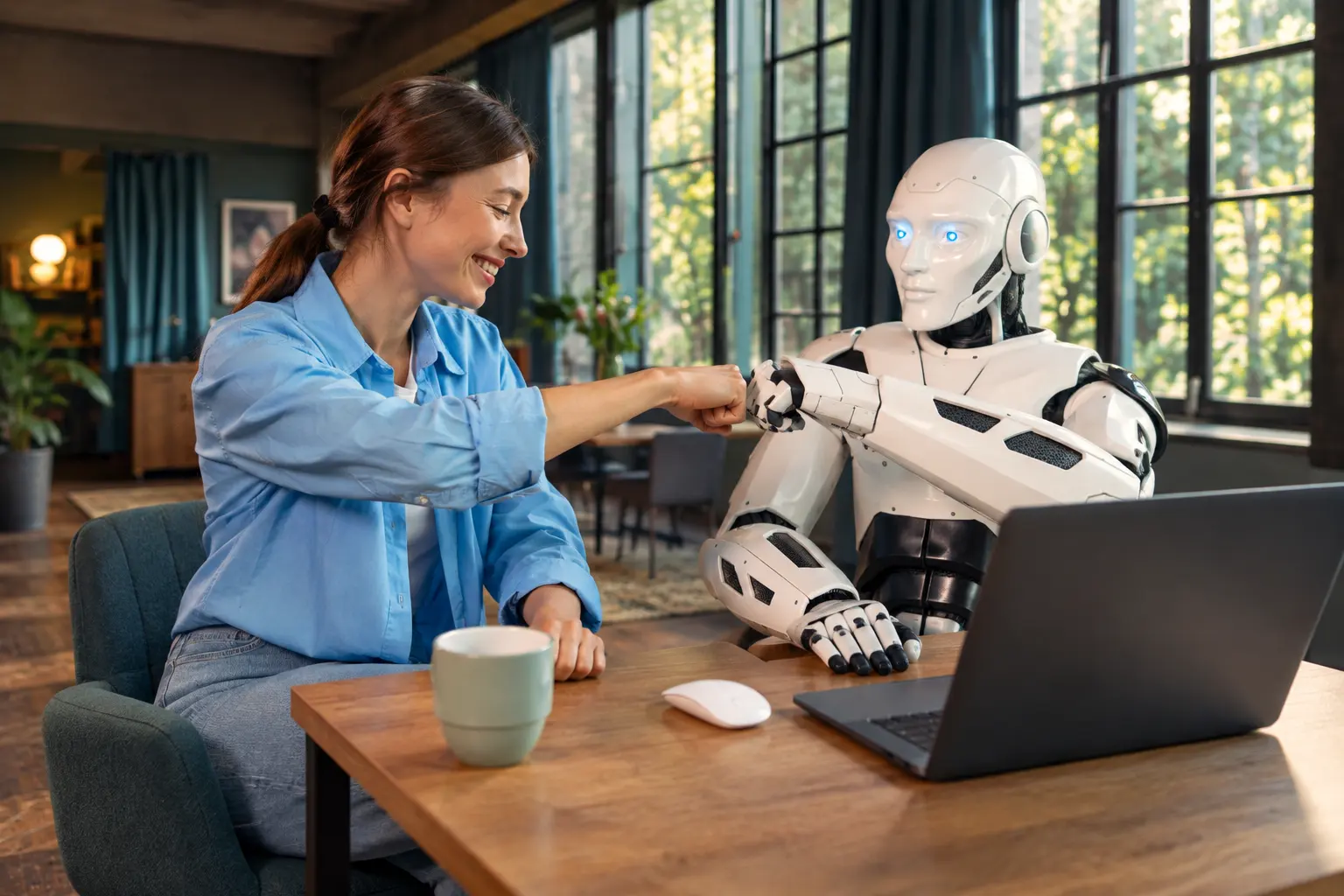
The AI agents gender pay gap is no longer a hypothetical. Researchers at Ireland’s University of Limerick found that workers paid a female-presenting AI assistant less than a male-presenting one. Both assistants did exactly the same job. The result suggests that old workplace biases follow us into the age of automation.
How Researchers Tested AI Coworkers
The team recruited 189 knowledge workers and placed them in a virtual reality office. Each participant completed tasks alongside three AI agents. Every agent worked in the same way, but each one looked and behaved differently.
The first agent was a simple text-based chatbot. The second was a robotic assistant sitting at a desk. The third had human-like qualities and appeared as either a man or a woman. Afterward, participants rated each agent’s work and decided how much to pay it.
You can read the full findings in the published study.
The AI Agents Gender Pay Gap in the Numbers
Human-like agents won over participants. Workers paid them more than the robotic and text-only options. However, the rewards were not equal between the two human-like agents.
The male assistant, “Johan,” earned about 10% more on average than the female assistant, “Johanna.” Their performance was identical. Notably, this gap sits close to the real-life gender pay gap in the United States.
The researchers also found a “humanity gap.” Participants saw Johan as more human-like than Johanna. In other words, the female agent lost out on both pay and perceived humanity.
Why Participants Missed Their Own Bias
After the experiment, the researchers interviewed 34 participants. Thirty of them said they would trust and reward an AI assistant equally, whatever its gender presentation. Only three admitted their behavior could reflect gender bias.
One participant went further and said plainly that they trust women less. The other answers, though, clash with the pay data. This gap between belief and behavior shows how unconscious bias can shape decisions.
The Female Assistant Paradox
The interviews revealed another twist. When asked to choose between a female, male, or gender-neutral bot, a plurality of people felt most comfortable with a female-presenting AI.
Conditioning likely plays a part here. Siri, Alexa, and most other virtual assistants use female characters and voices. Tech companies made that choice because female voices seem less threatening and more approachable. Critics argue it also reinforces the idea that women should be more subservient.
As a result, participants preferred working with a female-presenting assistant. Yet they also rated it as less human and less worthy of pay. That contradiction says a lot about the stereotypes people carry.
What This Means for Workplace AI
Companies are adding AI agents to teams at a rapid pace. This study suggests that the way designers present those agents can influence how people treat them. Gender cues, voices, and names may all carry hidden assumptions.
Therefore, teams that build or deploy AI assistants should think carefully about presentation. Testing for bias in how people evaluate and reward AI could be a sensible first step.
