


Google Pay Flex Card Launches Revised Rewards Ahead of Festive Season
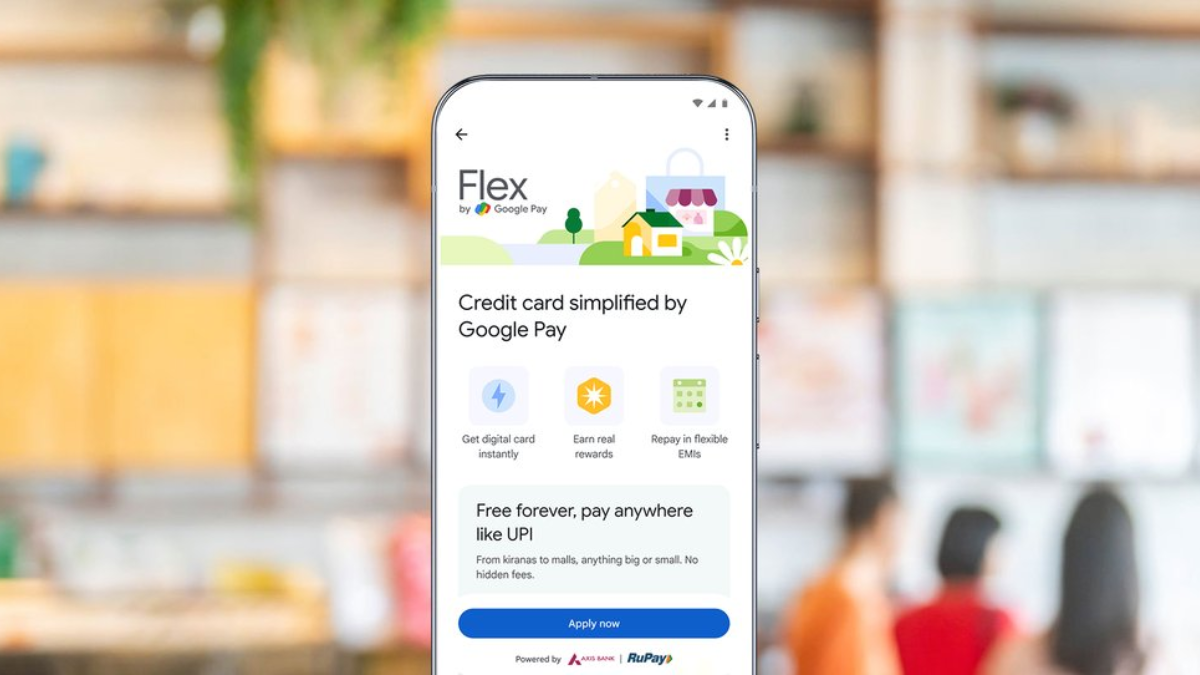
The Google Pay Flex Card is getting a comprehensive rewards overhaul starting October 16, 2026, just in time for India’s festive shopping period. Issued in collaboration with Axis Bank and SBI Card, the credit card lets users earn Stars on everyday spending, which can offset future Flex payments or be exchanged for gift voucher discounts. Google One members stand to benefit the most from the new tiered structure.
Specifically, subscribers who cross Rs. 15,000 in cycle spending will earn 3.2 percent back in Stars, while those below the threshold receive 1.6 percent. Non-subscribers earn 1.6 percent and 0.8 percent respectively. This creates a clear incentive to either consolidate spending on the card or upgrade to a Google One plan. In addition, a minimum spend of Rs. 100 in the prior cycle is required to avoid reduced base rates.
UPI Food Orders and Utility Bills Drive Bonus Stars
Category-specific bonuses add another layer of value. Google One members can earn 5 percent back up to Rs. 250 in Stars after spending Rs. 5,000 on UPI transactions across food and grocery apps like Swiggy, Zomato, Blinkit, and Zepto. Separately, utility categories including mobile recharges, broadband, DTH, and OTT subscriptions yield 15 percent back up to Rs. 450 in Stars after Rs. 3,000 in spend. Each bonus triggers once per reward cycle.
Meanwhile, the National Payments Corporation of India reports UPI transaction volumes continue to surge, making these category bonuses particularly relevant for high-frequency users. The integration of UPI-specific rewards directly on a credit card product represents a notable convergence of payment rails.
Enhanced Welcome Bonus and Payment Flexibility
First-time cardholders can now unlock up to Rs. 2,500 in rewards within their initial 60 days, nearly doubling previous welcome offers. The Google Pay Flex Card also maintains its EMI conversion capability, letting users split statement balances into instalments without leaving the app. This feature competes directly with dedicated BNPL providers operating in the market.
Ultimately, the refreshed programme signals Google’s intent to deepen its financial services footprint in India by rewarding ecosystem loyalty. The combination of tiered base rates, category accelerators, and a generous sign-up bonus creates a compelling proposition for digitally native consumers.
For official technical specifications and hardware documentation, visit AMD Official Specifications or MSI Technical Specs.
Google Pay Flex Card Market Impact and Industry Significance
The introduction of Google Pay Flex Card represents a pivotal shift in modern technological adoption across enterprise and consumer sectors alike. Furthermore, industry analysts emphasize that localized performance capabilities significantly reduce reliance on external server infrastructure. Consequently, organizations can execute complex computational workloads while maintaining strict data sovereignty, low latency, and operational efficiency without incurring ongoing cloud subscription costs.
Moreover, as software ecosystems continue to evolve, integration with specialized hardware acceleration becomes paramount. Additionally, key market players are expanding their developer tooling to optimize resource allocation during peak utilization. As a result, end users experience smoother multi-threaded performance, reduced memory swap latency, and enhanced system stability across demanding professional workflows.
Performance Benchmarks and Practical Google Pay Flex Card Scenarios
In real-world deployment scenarios, evaluating sustained throughput and thermal efficiency is essential for technical decision-makers. Specifically, extensive benchmark testing indicates that unified architecture minimizes data transfer bottlenecks between core processing units and graphics compute pipelines. Therefore, demanding tasks operate with minimal compute overhead.
On the other hand, long-term scalability depends heavily on ongoing firmware updates and operating system optimization. Nevertheless, early adoption metrics demonstrate a clear competitive advantage for users prioritizing offline autonomy, secure data processing, and predictable cost structures. Ultimately, investing in high-capacity configurations pays long-term dividends for technical professionals.
Ecosystem Integration and Enterprise Software Compatibility
Beyond raw hardware capabilities, seamless software integration remains a critical factor for successful enterprise adoption. Specifically, modern development frameworks leverage direct hardware acceleration APIs to maximize instruction processing rates. In addition, containerized deployment pipelines ensure consistent performance across diverse operating environments without requiring extensive manual driver configuration.
Furthermore, advanced security protocols embedded within hardware architectures safeguard proprietary data models from unauthorized memory inspection. Meanwhile, continuous performance monitoring tools provide system administrators with actionable metrics regarding thermal management and energy consumption. Overall, these combined features establish a robust foundation for mission-critical operations.

2 Comments
Pingback: Oppo Pad Mini Matte Display Edition, Enco X4 India Launch
Pingback: Scimplify AI Raises $25M to Challenge Chinese Material Control