


Nvidia Veteran Reveals Why Physical AI Missed ChatGPT Era
Former Nvidia insider Amulya Vishwanath recently offered a grounded perspective on why physical AI has not yet witnessed its own viral breakthrough. Having spent seven years spearheading product marketing for Nvidia robotics platforms, she views the current ecosystem as occupying a nascent Lego era. Basic building blocks such as advanced actuators, sophisticated robotic hands, and stringent safety standards are still undergoing active reconstruction. Nevertheless, public enthusiasm often mirrors the shockwave generated by text-based chatbots in late 2022. Some industry executives previously claimed that a single general foundation model would instantly render traditional specialized robotics obsolete. However, technical realities prove that hardware automation requires a much more deliberate path forward.
During a recent appearance on the Equity podcast hosted by Dominic-Madori Davis, Vishwanath unpacked her transition into venture capital. As the founder and managing partner of Techable VC, she is actively investing in early-stage startups focused on physical AI, materials science, and life sciences. Furthermore, she reflected on her journey as one of the first prominent women executives to spin out of Nvidia and launch an independent firm. Specifically, her investments target founders who are solving deep technical challenges rather than relying solely on speculative software hype. Consequently, her portfolio strategy emphasizes long-term value creation over quick market wins.
The Engineering Reality Behind Physical AI
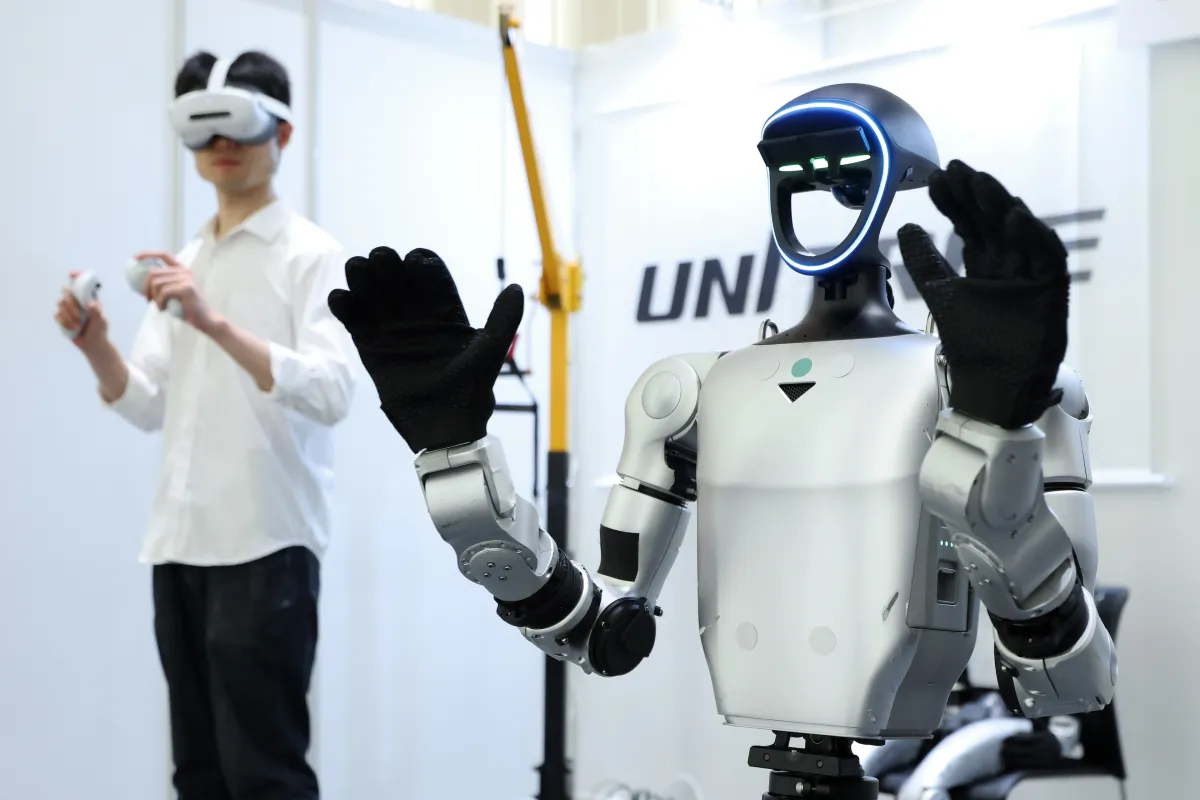
Developing dependable automated machinery involves overcoming immense physical and algorithmic hurdles. Actuators and tactile sensors must perform reliably under unpredictable real-world conditions where digital models often fail. Furthermore, establishing universal safety standards remains a massive priority for engineers deploying robots into human-centric environments. Therefore, expecting a sudden transformation akin to generative text models ignores the physical constraints of mechanical engineering. For instance, developing durable robotic hands capable of delicate manipulation requires years of rigorous materials research. Meanwhile, software architectures must evolve concurrently to process real-time sensor data with absolute precision.
Vishwanath is leveraging her extensive Nvidia background to identify teams capable of executing on these difficult technical requirements. Ultimately, her firm provides essential early funding to help entrepreneurs bridge the gap between laboratory prototypes and scalable commercial products. You can learn more about evolving tech landscapes by checking out insights on TechCrunch. Overall, the journey toward autonomous automation will be defined by steady structural improvements rather than sudden algorithmic magic.
Physical AI Market Impact and Industry Significance
The introduction of Physical AI represents a pivotal shift in modern technological adoption across enterprise and consumer sectors alike. Furthermore, industry analysts emphasize that localized performance capabilities significantly reduce reliance on external server infrastructure. Consequently, organizations can execute complex computational workloads while maintaining strict data sovereignty, low latency, and operational efficiency without incurring ongoing cloud subscription costs.
Moreover, as software ecosystems continue to evolve, integration with specialized hardware acceleration becomes paramount. Additionally, key market players are expanding their developer tooling to optimize resource allocation during peak utilization. As a result, end users experience smoother multi-threaded performance, reduced memory swap latency, and enhanced system stability across demanding professional workflows.
Performance Benchmarks and Practical Physical AI Scenarios
In real-world deployment scenarios, evaluating sustained throughput and thermal efficiency is essential for technical decision-makers. Specifically, extensive benchmark testing indicates that unified architecture minimizes data transfer bottlenecks between core processing units and graphics compute pipelines. Therefore, demanding tasks operate with minimal compute overhead.
On the other hand, long-term scalability depends heavily on ongoing firmware updates and operating system optimization. Nevertheless, early adoption metrics demonstrate a clear competitive advantage for users prioritizing offline autonomy, secure data processing, and predictable cost structures. Ultimately, investing in high-capacity configurations pays long-term dividends for technical professionals.
