


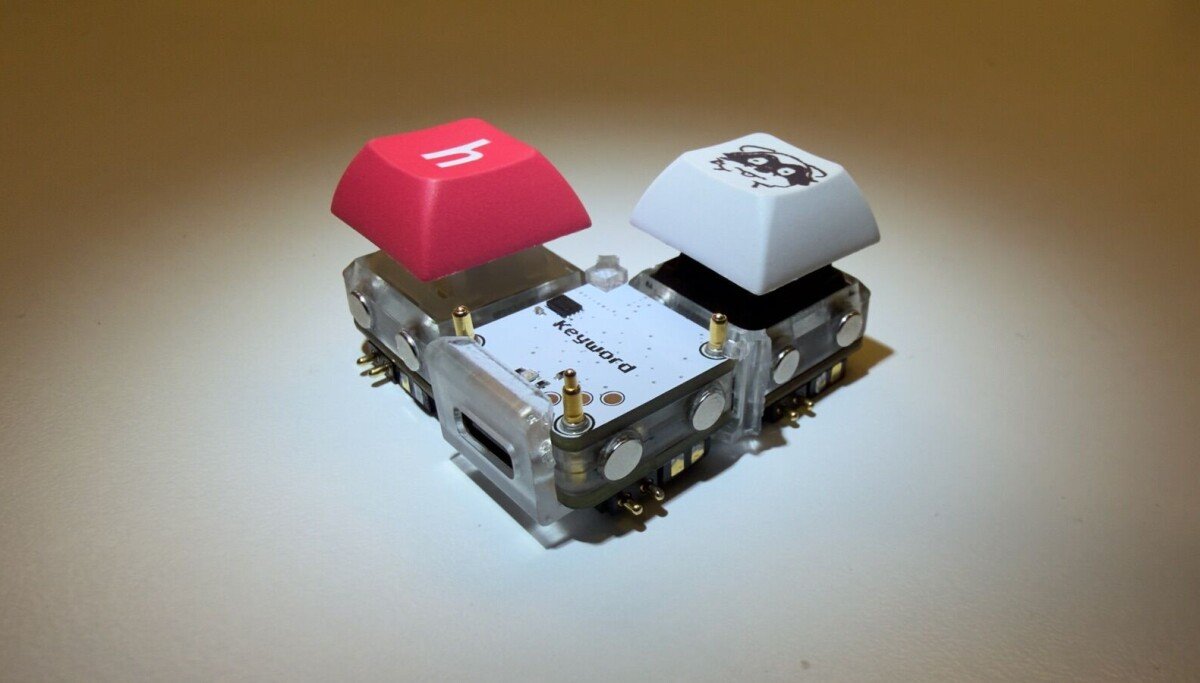
An MIT Freshman Invents a Magnetic Open Source Keyboard
When freshman aerospace engineering student Nathan Alspaugh wanted a fully adaptable input device, he decided to build an advanced open source keyboard completely from scratch. Standard commercial hardware offers zero physical layout changes, but this project utilizes magnetic pogo pins on all four sides of every key. Each key contains a dedicated RISC-V microcontroller, allowing adjacent modules to communicate seamlessly via I2C protocols while snapping together like toy building blocks.
Open Source Keyboard: Overcoming Hardware Setbacks and Expenses
Creating a functional open source keyboard demanded immense patience and technical troubleshooting. Alspaugh spent approximately 100 hours refining the hardware, battling misaligned magnets and complex circuit board errors. Because standard 3D printing methods were insufficient, he mastered resin 3D printing to fabricate precise structural enclosures. Professional assembly services also accounted for a large portion of the budget, highlighting the financial hurdles of custom hardware creation:
- Individual Keybit modules cost only a few dollars each.
- Central Keyword controller boards cost $30 each.
- Factory assembly for Keybits totaled $69.
- Factory assembly for Keywords totaled $203.
While the main GitHub readme outlines basic requirements like Cherry MX switches and custom PCBs, his personal project journal documents every engineering challenge. Builders interested in similar projects often reference hardware communities on platforms like Reddit for layout inspiration.
Market Comparison Against Commercial Alternatives
Most enthusiast peripherals, including popular models from Razer, rely on soldered switches and rigid plastic frames. By contrast, this magnetic hardware eliminates soldering requirements for layout adjustments. Although mass market adoption is unlikely due to high assembly costs, the underlying architecture showcases brilliant engineering ingenuity.
What This Innovation Means for DIY Builders
Ultimately, this experimental open source keyboard highlights the incredible potential of student-led hardware projects. While casual users will likely stick with pre-built retail models, makers and engineers now have a fascinating blueprint for truly modular desktop peripherals.
