


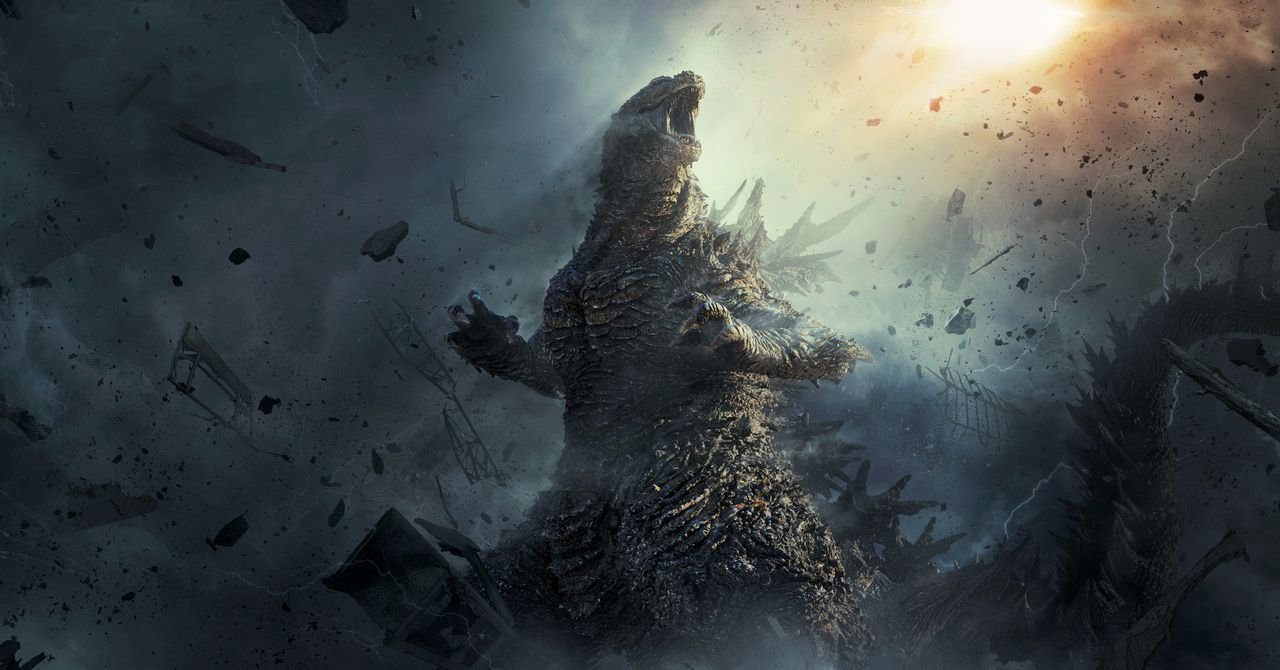
Godzilla Minus Zero Audio Innovation Disrupts Peaceful Dam Setting
Production crews for Godzilla Minus Zero transformed a serene outdoor dam into an impromptu monster arena when they deployed high-powered speakers to broadcast synthesized creature roars across the landscape. Sound designer Natsuko Inoue spearheaded this ambitious field recording session, aiming to harvest genuine environmental acoustics—natural reverb, delayed echoes, and surface reflections—that studio environments simply cannot replicate.
The experiment yielded immediate validation. Inoue witnessed her colleagues’ apprehension dissolve into confidence the moment the inaugural test roar propagated across the water. Those authentic spatial characteristics now embed themselves within every on-screen vocalization, granting the titular kaiju and its three-headed adversary King Ghidorah a physicality that pure post-production processing struggles to achieve.
Godzilla Minus Zero: Collateral Chaos Creates Unintended Public Performance
Local residents became unwitting participants in this sonic experiment. Picnickers abandoned meals, strollers froze mid-stride, and one unfortunate dog walker contended with a canine companion convinced the apocalypse had arrived. Hisafumi Takeuchi, recounting the episode at New York Comic Con, noted the dog’s frantic counter-vocalizations as the session’s most memorable moment—a live-action reaction shot no director could have staged.
This disruption underscores a fundamental truth about creature sound design: authenticity demands real-world interaction. When acoustic energy collides with actual atmosphere, geography, and unsuspecting biology, the resulting recordings carry micro-variations—wind modulation, humidity absorption, topological diffraction—that synthesize into perceptual credibility.
Traditional Craftsmanship Meets Digital Precision
Complementing the location work, Inoue’s team resurrected analog foley techniques for specific creature elements. Ghidorah’s wing beats emerged from a rubber fisherman’s suit flapped rhythmically, blended with air duct recordings mimicking accordion bellows. This hybrid workflow—field capture for macro presence, studio manipulation for micro detail—represents contemporary best practice in creature audio architecture.
Visual effects supervisor Tatsuji Nojima applies similar philosophy to the film’s imagery. His trajectory from adolescent hobbyist to Oscar recipient accelerated when director Takashi Yamazaki recognized potential in a rudimentary wave simulation. Nojima delivered a photorealistic ocean shot that secured his appointment as lead VFX artist, subsequently helping the franchise achieve $114 million global revenue with its previous entry.
Narrative Expansion Promises Elevated Spectacle
The sequel escalates beyond its predecessor’s ground-level devastation. New footage unveiled at NYCC showcases aerial combat sequences intertwining with the inevitable Godzilla-Ghidorah confrontation. Yamazaki retains directorial control, preserving the tonal gravity established in the 2023 film’s exploration of post-war Japanese psyche juxtaposed against unstoppable natural force.
Seth Green’s panel introduction highlighted the production’s dual commitment: monsters that “feel physically real and, trust me, emotionally terrifying.” That mandate drives every technical decision, from dam-deployed speaker arrays to hand-flapped rubber suits. Godzilla Minus Zero demonstrates how deliberate inconvenience—whether disturbing a picnic or exhausting a foley artist—translates into audience immersion that sterile perfection cannot provide.
Discover professional field recording techniques at Audio Engineering Society or examine VFX Voice for behind-the-scenes breakdowns of creature feature pipelines.
Godzilla Minus Zero Market Impact and Industry Significance
The introduction of Godzilla Minus Zero represents a pivotal shift in modern technological adoption across enterprise and consumer sectors alike. Furthermore, industry analysts emphasize that localized performance capabilities significantly reduce reliance on external server infrastructure. Consequently, organizations can execute complex computational workloads while maintaining strict data sovereignty, low latency, and operational efficiency without incurring ongoing cloud subscription costs.
Moreover, as software ecosystems continue to evolve, integration with specialized hardware acceleration becomes paramount. Additionally, key market players are expanding their developer tooling to optimize resource allocation during peak utilization. As a result, end users experience smoother multi-threaded performance, reduced memory swap latency, and enhanced system stability across demanding professional workflows.
Performance Benchmarks and Practical Godzilla Minus Zero Scenarios
In real-world deployment scenarios, evaluating sustained throughput and thermal efficiency is essential for technical decision-makers. Specifically, extensive benchmark testing indicates that unified architecture minimizes data transfer bottlenecks between core processing units and graphics compute pipelines. Therefore, demanding tasks operate with minimal compute overhead.
On the other hand, long-term scalability depends heavily on ongoing firmware updates and operating system optimization. Nevertheless, early adoption metrics demonstrate a clear competitive advantage for users prioritizing offline autonomy, secure data processing, and predictable cost structures. Ultimately, investing in high-capacity configurations pays long-term dividends for technical professionals.
Ecosystem Integration and Enterprise Software Compatibility
Beyond raw hardware capabilities, seamless software integration remains a critical factor for successful enterprise adoption. Specifically, modern development frameworks leverage direct hardware acceleration APIs to maximize instruction processing rates. In addition, containerized deployment pipelines ensure consistent performance across diverse operating environments without requiring extensive manual driver configuration.
Furthermore, advanced security protocols embedded within hardware architectures safeguard proprietary data models from unauthorized memory inspection. Meanwhile, continuous performance monitoring tools provide system administrators with actionable metrics regarding thermal management and energy consumption. Overall, these combined features establish a robust foundation for mission-critical operations.

8 Comments
Pingback: How Google Gemini Handles Routine Tasks Through Automation
Pingback: Why Mini DisplayPort Disappeared From New Computers
Pingback: Home Personal AI Assistant Appliance Future Near, Says
Pingback: Science Corporation Implants PRIMA Vision Chip in First
Pingback: North Korean Hackers Breached 70 US Companies Via Texas
Pingback: CISA Chief Touts Partnerships While Agency Axes Key Programs
Pingback: Claude Code Deluge Drives Anthropic Scion Adoption
Pingback: Security Experts Warn Ransomware Physical Threats Now Target