


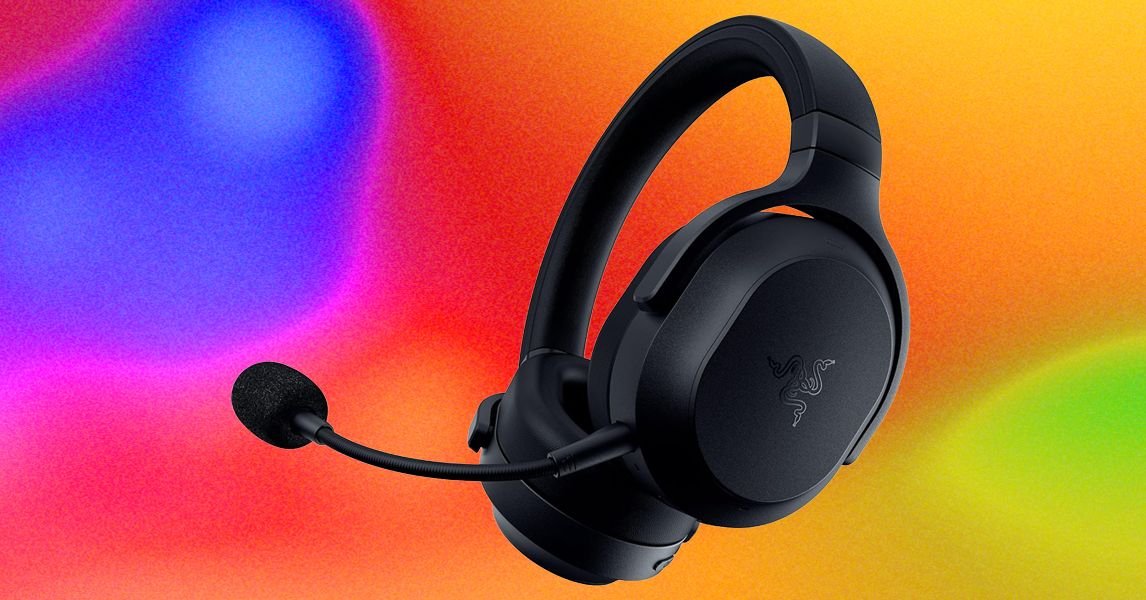
Razer Barracuda V2 Pro Bridges Work and Play Audio
Balancing professional responsibilities with personal gaming habits often requires managing multiple specialized audio devices throughout the day. However, the Razer Barracuda V2 Pro aims to simplify this routine by combining high-end office functionality with premium gaming performance. Traditional gaming headsets often feature bright lights and bulky microphones that look out of place in professional environments. In contrast, this model delivers a refined over-ear aesthetic that looks entirely natural in a corporate office or a local coffee shop. Specifically, it eliminates the need to carry separate earbuds for calls and heavy headsets for entertainment. Users can now enjoy a single, polished device that adapts seamlessly to any setting.
Audio fidelity during playback tests remains remarkably crisp, handling daily music listening and virtual meetings with equal competence. The integrated hybrid active noise canceling system performs exceptionally well at silencing background distractions in public spaces. Furthermore, users can customize their listening profiles through software to match specific media genres like movies or games. Pressing the onboard buttons allows for quick toggling between Bluetooth, HyperSpeed wireless, and wired modes without missing a beat. Consequently, switching from a laptop conference call to a smartphone playlist happens almost instantly. Additionally, the smart placement of the wireless dongle inside the earcup ensures effortless portability for commuters.
Advanced Features of the Razer Barracuda V2 Pro
Compatibility across multiple gaming consoles and personal computers elevates the appeal of the Razer Barracuda V2 Pro significantly. Gamers can utilize the device with PlayStation, PC, Mac, and mobile platforms while enjoying simultaneous audio connectivity. This dual-connection capability means you can take an incoming phone call without disconnecting from your active gaming session. Moreover, onboard media controls grant quick access to track skipping, volume adjustments, and call management directly from the earcup. Therefore, reaching for your phone or keyboard during a busy workday becomes entirely unnecessary for basic audio adjustments.
Communication clarity is handled expertly by internal beamforming arrays or an optional detachable boom microphone, depending on user preference. Both microphone options capture vocals clearly, satisfying colleagues during virtual meetings and teammates during competitive matches. Although the memory foam earcups provide plush comfort, users with smaller heads might notice a tight fit after hours of continuous wear. Nevertheless, the overall engineering of the Razer Barracuda V2 Pro establishes a high benchmark for multipurpose audio peripherals. For more details on audio hardware trends, you can read industry insights on The Verge.
Razer Barracuda V2 Pro Market Impact and Industry Significance
The introduction of Razer Barracuda V2 Pro represents a pivotal shift in modern technological adoption across enterprise and consumer sectors alike. Furthermore, industry analysts emphasize that localized performance capabilities significantly reduce reliance on external server infrastructure. Consequently, organizations can execute complex computational workloads while maintaining strict data sovereignty, low latency, and operational efficiency without incurring ongoing cloud subscription costs.
Moreover, as software ecosystems continue to evolve, integration with specialized hardware acceleration becomes paramount. Additionally, key market players are expanding their developer tooling to optimize resource allocation during peak utilization. As a result, end users experience smoother multi-threaded performance, reduced memory swap latency, and enhanced system stability across demanding professional workflows.
Performance Benchmarks and Practical Razer Barracuda V2 Pro Scenarios
In real-world deployment scenarios, evaluating sustained throughput and thermal efficiency is essential for technical decision-makers. Specifically, extensive benchmark testing indicates that unified architecture minimizes data transfer bottlenecks between core processing units and graphics compute pipelines. Therefore, demanding tasks operate with minimal compute overhead.
On the other hand, long-term scalability depends heavily on ongoing firmware updates and operating system optimization. Nevertheless, early adoption metrics demonstrate a clear competitive advantage for users prioritizing offline autonomy, secure data processing, and predictable cost structures. Ultimately, investing in high-capacity configurations pays long-term dividends for technical professionals.

4 Comments
Pingback: Ubuntu Stonking Stingray Lands With New AI Features
Pingback: New CiteProof Tool Exposes Fake AI Citations in Court
Pingback: New Porsche Macan Turbo Impact Reshapes Luxury Driving
Pingback: Corporate Mystery Unfolds At NRED Intelligent Mining Firm