


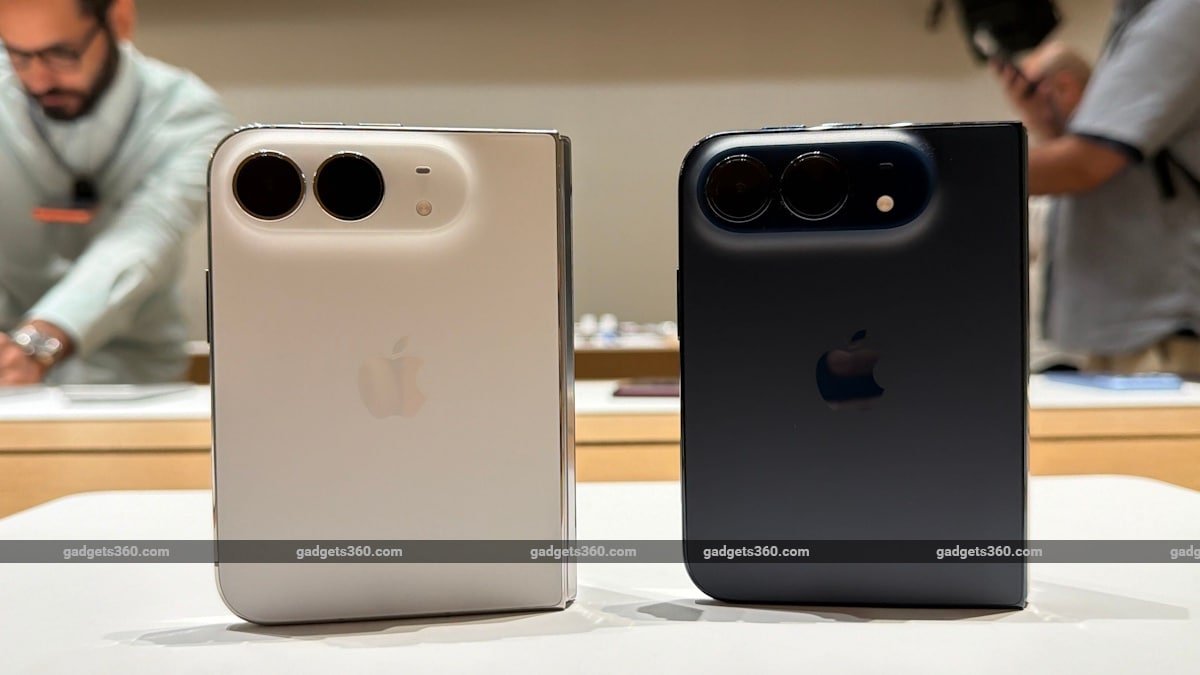
Apple Turns iPhone Duo Hinge Into Thermal Conduit
Apple’s first foldable handset, the iPhone Duo, employs a flexible graphite heat pipe that runs directly through its hinge mechanism. This design choice transforms what is typically a structural weak point into an active thermal pathway, moving heat between the two display modules. In an interview with PCMag, Dan Murray, Vice President of Silicon Engineering, and Banafsheh Barabadi, Senior Manager of Thermal Product Design, explained that the pipe increases the total dissipation surface area, a decisive advantage in a form factor where every cubic millimeter counts.
Moreover, the thermal architecture was developed in concert with the A20 Pro chip, Apple’s inaugural 2nm mobile processor. The SoC incorporates a vapor chamber constructed from a proprietary “metal over foam” composite that maintains direct die contact while accommodating mechanical flex. Barabadi disclosed that the material underwent months of qualification to ensure it would not degrade under repeated thermal cycling and physical deformation inside the iPhone Duo.
Flexible Graphite Pipe Endures Repeated Folding
Creating a heat pipe that survives thousands of bend cycles without cracking or losing conductivity required close collaboration between Apple’s thermal and mechanical engineering groups. The team optimized graphite orientation, binder chemistry, and outer sheath materials to preserve both flexibility and thermal performance. As a result, the hinge assembly on the iPhone Duo functions as a heat spreader rather than a thermal barrier, distributing warmth evenly across both halves of the device during sustained workloads.
In addition, the foldable-specific A20 Pro variant includes a second display engine to drive the dual-panel interface, adding to the thermal budget. Murray stressed that the chip, vapor chamber, and hinge pipe were architected as a single integrated system, not as disparate components bolted together late in development. This holistic methodology allowed Apple to meet skin-temperature targets without throttling performance.
New Benchmark for Foldable Heat Management
The hinge-integrated pipe represents a departure from conventional foldable cooling strategies, which typically confine vapor chambers or graphite sheets to rigid chassis sections. By exploiting the hinge as a thermal bridge, Apple effectively doubles the available dissipation area without increasing device thickness. Meanwhile, rivals continue to evaluate alternatives such as liquid metal thermal interfaces and phase-change pads, though none have shipped a comparable solution in a production foldable like the iPhone Duo.
For additional perspective on 2nm mobile process advancements, refer to TSMC’s 2nm technology overview. Ultimately, the iPhone Duo establishes a precedent where mechanical motion and thermal transfer are engineered in unison, potentially reshaping thermal expectations for future foldable smartphones.
Iphone Duo Market Impact and Industry Significance
The introduction of Iphone Duo represents a pivotal shift in modern technological adoption across enterprise and consumer sectors alike. Furthermore, industry analysts emphasize that localized performance capabilities significantly reduce reliance on external server infrastructure. Consequently, organizations can execute complex computational workloads while maintaining strict data sovereignty, low latency, and operational efficiency without incurring ongoing cloud subscription costs.
Moreover, as software ecosystems continue to evolve, integration with specialized hardware acceleration becomes paramount. Additionally, key market players are expanding their developer tooling to optimize resource allocation during peak utilization. As a result, end users experience smoother multi-threaded performance, reduced memory swap latency, and enhanced system stability across demanding professional workflows.
Performance Benchmarks and Practical Iphone Duo Scenarios
In real-world deployment scenarios, evaluating sustained throughput and thermal efficiency is essential for technical decision-makers. Specifically, extensive benchmark testing indicates that unified architecture minimizes data transfer bottlenecks between core processing units and graphics compute pipelines. Therefore, demanding tasks operate with minimal compute overhead.
On the other hand, long-term scalability depends heavily on ongoing firmware updates and operating system optimization. Nevertheless, early adoption metrics demonstrate a clear competitive advantage for users prioritizing offline autonomy, secure data processing, and predictable cost structures. Ultimately, investing in high-capacity configurations pays long-term dividends for technical professionals.
Ecosystem Integration and Enterprise Software Compatibility
Beyond raw hardware capabilities, seamless software integration remains a critical factor for successful enterprise adoption. Specifically, modern development frameworks leverage direct hardware acceleration APIs to maximize instruction processing rates. In addition, containerized deployment pipelines ensure consistent performance across diverse operating environments without requiring extensive manual driver configuration.
Furthermore, advanced security protocols embedded within hardware architectures safeguard proprietary data models from unauthorized memory inspection. Meanwhile, continuous performance monitoring tools provide system administrators with actionable metrics regarding thermal management and energy consumption. Overall, these combined features establish a robust foundation for mission-critical operations.

11 Comments
Pingback: [ ends with ]
Pingback: Scimplify AI Raises $25M to Challenge Chinese Material Control
Pingback: How To Reserve iPhone Duo Ahead Of Launch With Apple Get Ready
Pingback: Apple Music Logo Update in iOS 17.2 Beta Triggers Design Debate
Pingback: Is Mini DisplayPort becoming obsolete?
Pingback: Testing the Friend AI Pendant: When Your Necklace Won't Stop
Pingback: Breville Eye Q Toaster Review: Optical Sensors Promise
Pingback: Testing the JackRabbit MG Cargo: Tiny Frame Massive Hauling
Pingback: India Welcomes First Five-Door Haier In-Vista Refrigerator at
Pingback: Oppo Pad Mini Matte Display Edition, Enco X4 India Launch
Pingback: Xiaomi Launches Mijia Smart Air Purifier 6 in India at Rs 19,999