


SpaceX Collaboration Powers New Tesla Roadster Innovation
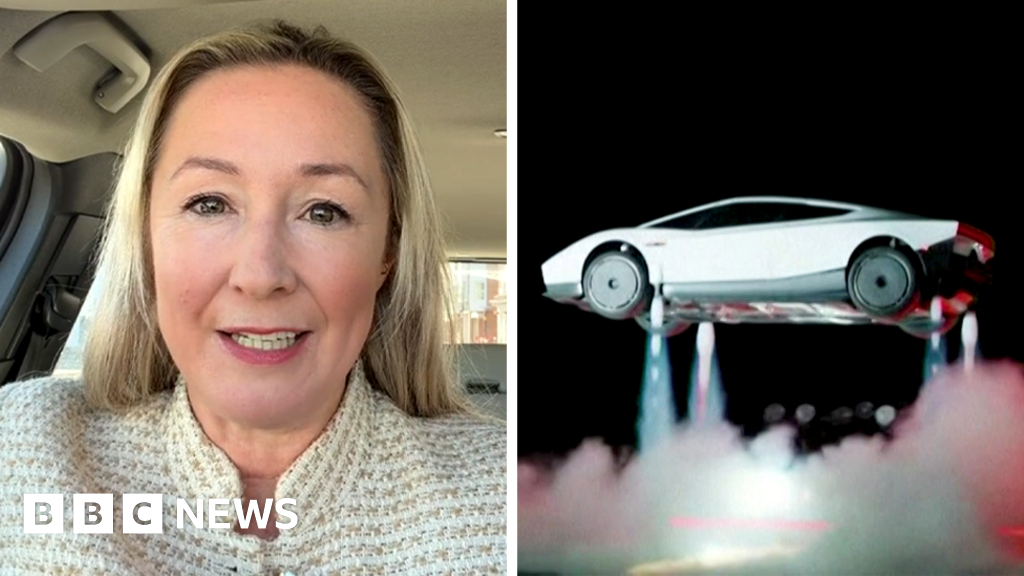
In a surprising crossover between automotive design and aerospace engineering, the latest version of the Tesla Roadster made headlines by demonstrating actual mid-air hovering capabilities in Texas. Elon Musk hosted the exclusive event at a facility owned by SpaceX, emphasizing that the aggressive vehicle demonstration was captured live to prove it relied on physical hardware rather than computer-generated imagery.
During the reveal, the electric sports car charged up a steep ramp, launched into the air, and executed a controlled spin before stabilizing itself with compressed air jets. Because SpaceX engineers assisted with the propulsion design, the vehicle bridges traditional tire-based driving with directional rocket thrusters. Although transport regulators will not clear flying passenger vehicles for public roadways anytime soon, the stunt successfully captured global attention.
Engineering Behind the Air-Jet Stabilization System
Pushing a passenger vehicle into the air requires meticulous weight distribution and rapid computer stabilization. Traditional cars depend entirely on mechanical friction against the asphalt, but this upgraded model utilizes high-pressure air thrusters to manipulate its orientation while airborne.
- Core Technology: High-pressure compressed air thrusters derived from aerospace research.
- Live Stunt: Ramp launch, mid-air rotation, and controlled thruster-assisted landing.
- Development Partner: Aerospace manufacturer SpaceX.
Despite the visual spectacle, significant hurdles remain before this technology becomes commercially viable. Federal safety standards, noise pollution laws, and energy consumption limits mean that drivers will keep all four wheels planted on the asphalt for the foreseeable future. Even so, the engineering ambition behind the project highlights how far modern electric platforms have evolved.
The Bottom Line on This HighFlying Automotive Stunt
While the Tesla Roadster will not replace commercial helicopters, the stunt demonstrates the relentless pursuit of boundary-pushing engineering. By borrowing technology from orbital rocketry, the automaker continues to challenge conventional wisdom about what electric sports cars can achieve.
Whether these thrusters transition from experimental prototypes to optional production packages remains to be seen. For further details on cutting-edge transport tech and upcoming vehicle releases, visit official updates from SpaceX to track their latest aerospace milestones.
Tesla Roadster Market Impact and Industry Significance
The introduction of Tesla Roadster represents a pivotal shift in modern technological adoption across enterprise and consumer sectors alike. Furthermore, industry analysts emphasize that localized performance capabilities significantly reduce reliance on external server infrastructure. Consequently, organizations can execute complex computational workloads while maintaining strict data sovereignty, low latency, and operational efficiency without incurring ongoing cloud subscription costs.
Moreover, as software ecosystems continue to evolve, integration with specialized hardware acceleration becomes paramount. Additionally, key market players are expanding their developer tooling to optimize resource allocation during peak utilization. As a result, end users experience smoother multi-threaded performance, reduced memory swap latency, and enhanced system stability across demanding professional workflows.
Performance Benchmarks and Practical Tesla Roadster Scenarios
In real-world deployment scenarios, evaluating sustained throughput and thermal efficiency is essential for technical decision-makers. Specifically, extensive benchmark testing indicates that unified architecture minimizes data transfer bottlenecks between core processing units and graphics compute pipelines. Therefore, demanding tasks operate with minimal compute overhead.
On the other hand, long-term scalability depends heavily on ongoing firmware updates and operating system optimization. Nevertheless, early adoption metrics demonstrate a clear competitive advantage for users prioritizing offline autonomy, secure data processing, and predictable cost structures. Ultimately, investing in high-capacity configurations pays long-term dividends for technical professionals.
