


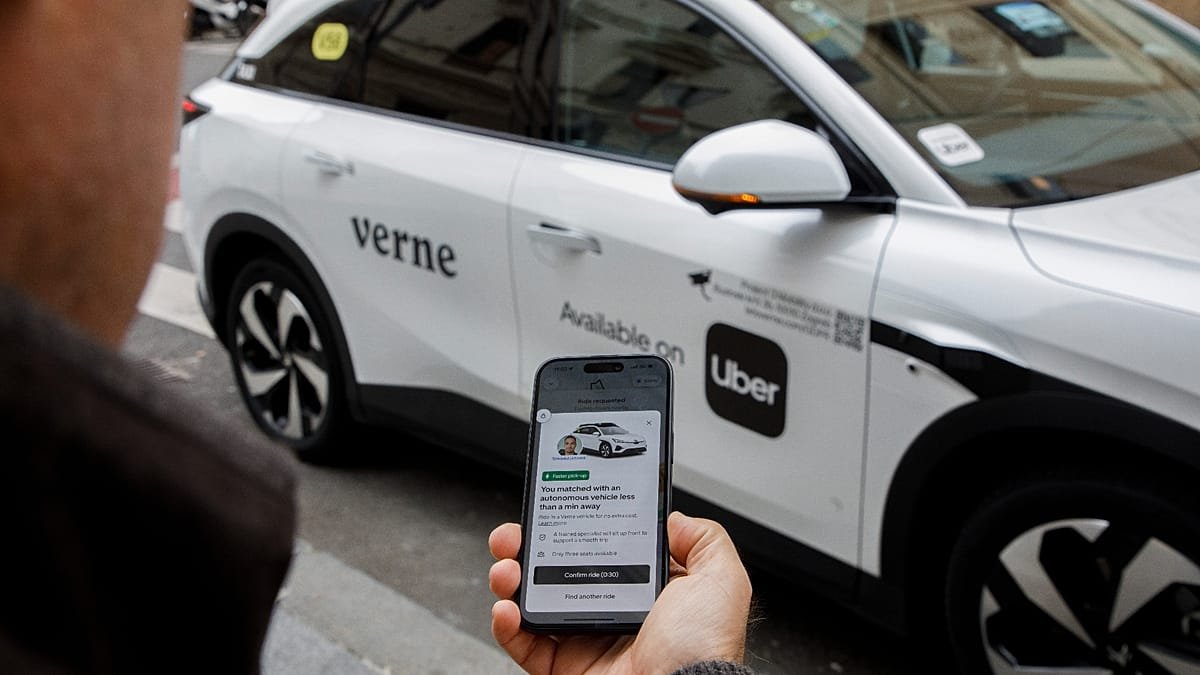
Driverless Robotaxis: Uber Expands Autonomous Fleet Service Across European Cities
Urban mobility is shifting rapidly as driverless robotaxis officially transition from closed testing grounds onto live public streets in Europe. Uber deployment efforts in Zagreb are now fully operational without human safety operators inside the vehicle cabin, showcasing the maturity of modern autonomous systems.
Working alongside local operator Verne—founded by the creator of Rimac hypercars Mate Rimac—and artificial intelligence pioneer Pony.ai, Uber is turning what started as an experimental concept into a scalable commercial reality. Passengers booking trips in Zagreb are stepping into electric SUVs that navigate complex airport routes entirely on their own.
Scaling Up Autonomous Rides From Zagreb to London
While European regulators traditionally maintain strict scrutiny over autonomous vehicle testing, this tripartite partnership is pushing boundaries through careful, phased deployments. Since launching earlier this year, test vehicles have accumulated over 200,000 kilometres on local pavement, building the data necessary to transition into fully driverless operations.
- Seamless booking integration inside standard ride-hailing apps
- Specialized routes linking city centers directly to international airports
- Advanced remote support systems ready to assist passengers instantly
- Planned expansion waves targeting Manchester and London
Although skeptics questioned whether a US-Chinese-European business alliance could bridge differing regulatory philosophies, the rapid deployment in Croatia proves the model works. Because all three entities share a unified vision for urban transit, the infrastructure is falling into place much faster than anticipated.
Why This Milestone Matters for the Future of Transport
The introduction of driverless robotaxis represents a fundamental shift in how city dwellers think about daily commuting and vehicle ownership. Instead of relying exclusively on human drivers, urban transit networks are beginning to incorporate reliable artificial intelligence directly into everyday workflows. As these driverless robotaxis arrive in additional European transport hubs over the coming months, the era of widespread autonomous mobility is finally becoming a tangible reality for everyday passengers.
For full official background and direct documentation, read the source coverage on Euronews.com Reporting.
