


Mathematics was long considered the last stronghold of pure human intellect. That belief is now being tested by a fast-moving AI mathematics controversy involving OpenAI, a NYU professor, and one of the hardest unsolved problems in the field.
The dispute centers on Tristan Buckmaster, a mathematics professor at New York University. Buckmaster recently told the Australian Broadcasting Corporation that artificial intelligence has become so skilled at working through advanced math that it has permanently reshaped the role of human mathematicians. In his view, the field has reached a turning point it cannot walk back from.
His outlook was blunt. As he put it, “the game is up” for mathematicians hoping to stay ahead of AI systems.
How the Controversy Began
The situation escalated on Tuesday, when OpenAI announced it had cracked the Navier-Stokes existence and smoothness problem. This is one of the celebrated Millennium Problems, a group of notoriously difficult mathematical puzzles that each carry a $1 million prize for a verified solution.
Before publishing the result, OpenAI contacted Buckmaster directly. He had reportedly made progress on a closely related problem alongside fellow researcher Levent Alpöge, who works at Anthropic but was collaborating independently on this project. Both mathematicians had leaned on AI tools during their research, including OpenAI’s Codex system. In fact, the technology’s capability struck Buckmaster so deeply that he compared the moment to a historic milestone in AI versus human competition. He made that comparison just before OpenAI released its own findings.
That admiration quickly turned to suspicion. Once Buckmaster reviewed OpenAI’s methodology, he began to question whether logs from his and Alpöge’s own Codex sessions had been used without proper acknowledgment.
The Credit Dispute Escalates
According to Buckmaster, OpenAI proposed two paths forward for sharing recognition. One option would have let him publish his findings alongside the company’s own announcement, but only if Alpöge’s name were left off entirely. Buckmaster rejected both proposals outright.
The fallout spread quickly through academic circles. A group of current and former CalTech mathematicians published an open letter on Wednesday criticizing AI companies for prioritizing headline-grabbing results over careful, collaborative mathematical progress, arguing that the rush to claim breakthroughs risks real damage to the field’s integrity.
OpenAI has pushed back on the implication that it used Buckmaster’s work improperly. A company spokesperson insisted it was not possible for his recent Codex activity to have shaped the system in any way, including through training. However, the company later acknowledged to reporters that it could not entirely rule out that Buckmaster and Alpöge’s usage may have contributed to model improvements. Buckmaster has said he asked OpenAI directly whether their work influenced training and did not receive a clear answer.
Why This AI Mathematics Controversy Matters
This isn’t simply a dispute about credit. It reflects a bigger question facing academic fields as AI tools become embedded in daily research. When a company can rapidly deploy AI to solve problems that took human experts years, questions about intellectual ownership become unavoidable.
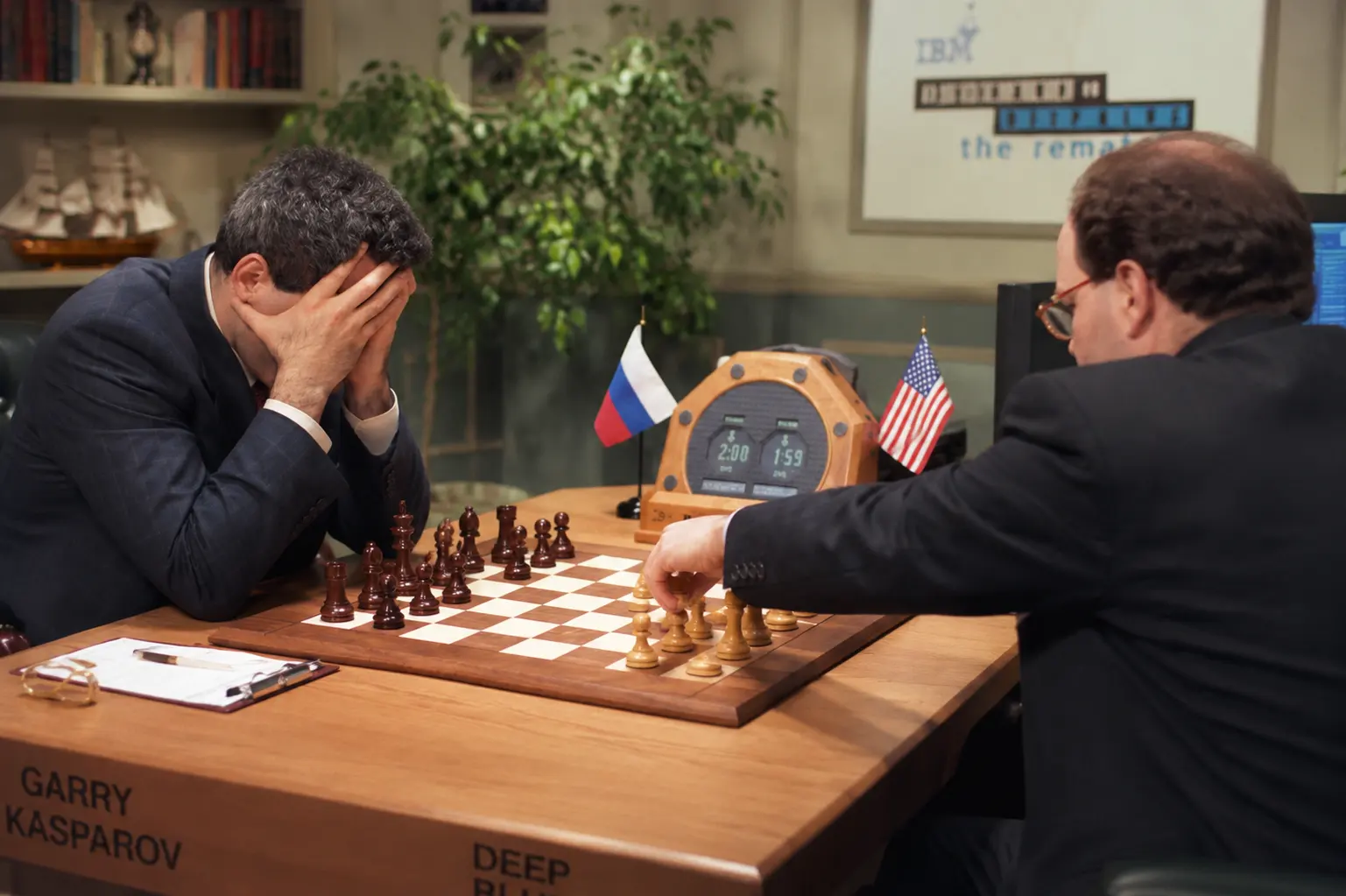
At the same time, history suggests some caution is warranted before declaring the death of human mathematics. Chess and Go both fell to machines decades apart, yet people never stopped playing either game. Human curiosity tends to persist even after computers surpass us at a task.
For this reason, Buckmaster’s dramatic prediction may prove premature. The pace of AI-driven change in mathematics is undeniably fast, faster than most previous technological shifts. Still, faster change doesn’t necessarily mean humans stop participating altogether; it may simply mean the nature of participation changes.
What Happens Next
Neither OpenAI nor Buckmaster has offered further public comment since the initial statements. The broader mathematics community, however, appears to be paying close attention, particularly around how future AI-assisted breakthroughs get credited and verified.
As AI systems continue tackling problems once thought to require decades of human effort, expect more disputes like this one. Mathematicians, universities, and AI companies will likely need clearer norms around collaboration, credit, and transparency going forward.
