


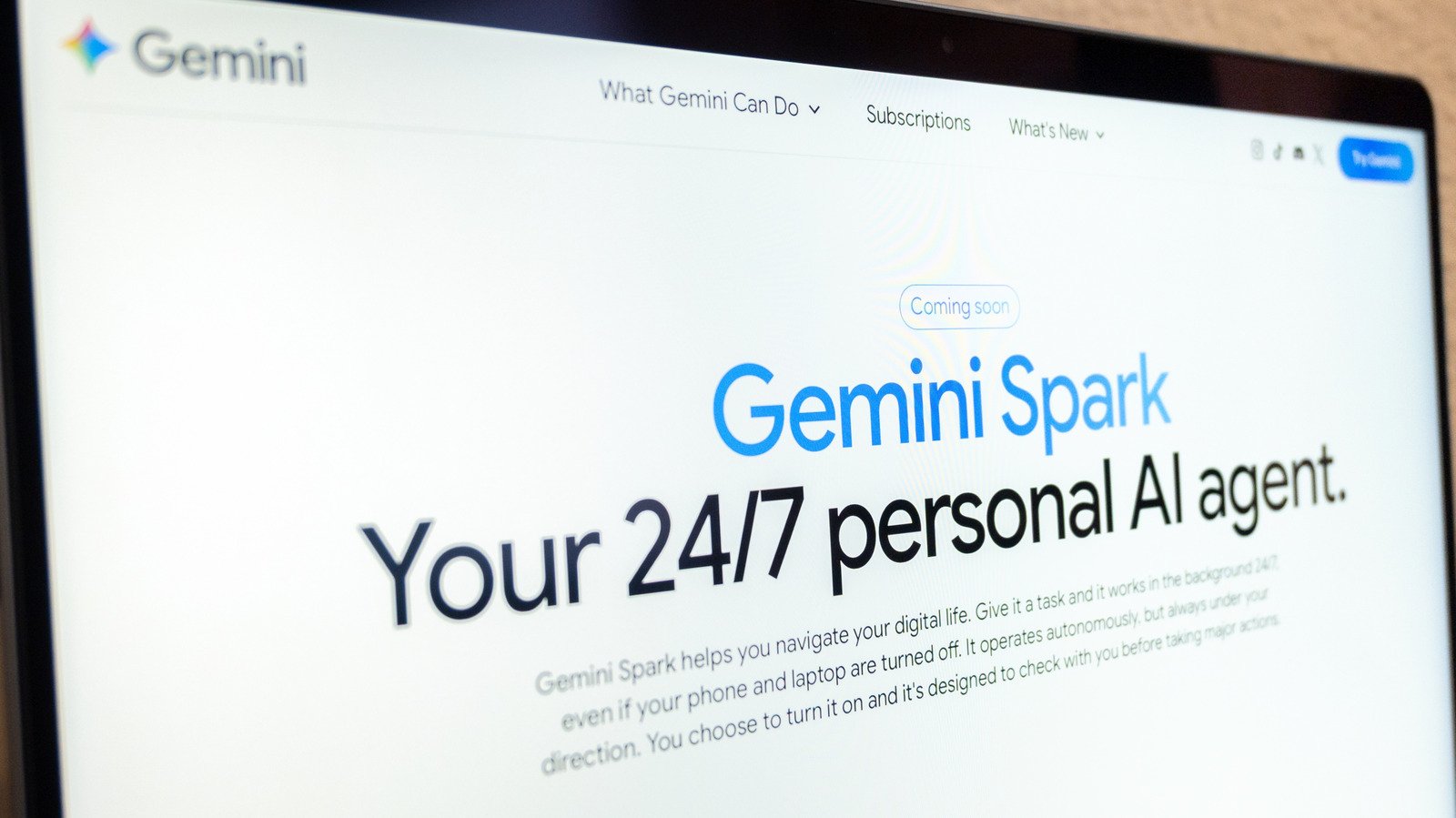
Gemini Spark Access Requirements
Gemini Spark arrives as Google’s answer to the growing demand for agentic assistants that actually complete work rather than merely suggest it. The service targets Google AI Pro and Ultra subscribers, with select business tiers also gaining entry. Geographic restrictions currently exclude the European Economic Area, Switzerland, the UK, and Nigeria. Additionally, the “Keep activity” setting must remain active to preserve conversational context between sessions.
Availability spans the Gemini mobile app, dedicated Mac application, and standard web interface. Chrome users gain an extra capability through auto-browse, which navigates websites to fulfill requests like securing dinner reservations or comparing flight options. Consequently, the assistant functions across most surfaces where Google’s ecosystem lives. Setup completes in minutes for eligible accounts.
Gemini Spark Capabilities Across Apps
Gemini Spark connects deeply with Workspace applications to execute multi-step automations. You might ask it to convert fifty past email responses into a reusable style guide that shapes future replies. Alternatively, configure an internship tracker that captures deadlines and contact details from incoming messages automatically. Furthermore, Personal Intelligence tailors recommendations by analyzing patterns across your Google apps.
Cross-app workflows demonstrate the real power. The assistant drafts presentation slides from document outlines, creates calendar events from email threads, and condenses sprawling conversation histories into actionable summaries. Meanwhile, background processing ensures your primary workflow stays uninterrupted. Google characterizes this behavior as proactive action bounded by your initial instructions.
Important Limitations of Gemini Spark
Several critical constraints warrant attention before deploying automations at scale. Never embed authentication credentials or financial data inside task definitions. Enter such information manually on the destination site instead. Avoid scheduling sensitive operations during offline periods, since errors could propagate unchecked. Regularly audit results because the model still hallucinates occasionally.
These limitations underscore a broader reality about current agentic systems. Automation handles routine execution well, yet judgment calls require human review. Therefore, position Spark as an accelerator rather than a replacement for oversight. Google’s own guidance echoes this philosophy throughout its documentation.
Creating Automations with Gemini Spark
Launch Gemini on any supported platform, open the Menu, and choose Spark. Describe your desired automation in plain language within the input field. Google provides this starter example: “When I receive an email inquiring about my photography services, automatically extract the client’s name, requested date.” The system interprets the trigger and begins watching for matching conditions.
Begin with safe, reversible tasks like inbox organization or document reformatting. Expand scope gradually as you verify reliability. For technical deep-dives on agent frameworks, consult Google’s Gemini API developer guide. Ultimately, Gemini Spark signals a meaningful step toward AI that acts on your behalf rather than just answering questions.
Gemini Spark Market Impact and Industry Significance
The introduction of Gemini Spark represents a pivotal shift in modern technological adoption across enterprise and consumer sectors alike. Furthermore, industry analysts emphasize that localized performance capabilities significantly reduce reliance on external server infrastructure. Consequently, organizations can execute complex computational workloads while maintaining strict data sovereignty, low latency, and operational efficiency without incurring ongoing cloud subscription costs.
Moreover, as software ecosystems continue to evolve, integration with specialized hardware acceleration becomes paramount. Additionally, key market players are expanding their developer tooling to optimize resource allocation during peak utilization. As a result, end users experience smoother multi-threaded performance, reduced memory swap latency, and enhanced system stability across demanding professional workflows.
Performance Benchmarks and Practical Gemini Spark Scenarios
In real-world deployment scenarios, evaluating sustained throughput and thermal efficiency is essential for technical decision-makers. Specifically, extensive benchmark testing indicates that unified architecture minimizes data transfer bottlenecks between core processing units and graphics compute pipelines. Therefore, demanding tasks operate with minimal compute overhead.
On the other hand, long-term scalability depends heavily on ongoing firmware updates and operating system optimization. Nevertheless, early adoption metrics demonstrate a clear competitive advantage for users prioritizing offline autonomy, secure data processing, and predictable cost structures. Ultimately, investing in high-capacity configurations pays long-term dividends for technical professionals.
Ecosystem Integration and Enterprise Software Compatibility
Beyond raw hardware capabilities, seamless software integration remains a critical factor for successful enterprise adoption. Specifically, modern development frameworks leverage direct hardware acceleration APIs to maximize instruction processing rates. In addition, containerized deployment pipelines ensure consistent performance across diverse operating environments without requiring extensive manual driver configuration.
Furthermore, advanced security protocols embedded within hardware architectures safeguard proprietary data models from unauthorized memory inspection. Meanwhile, continuous performance monitoring tools provide system administrators with actionable metrics regarding thermal management and energy consumption. Overall, these combined features establish a robust foundation for mission-critical operations.
