


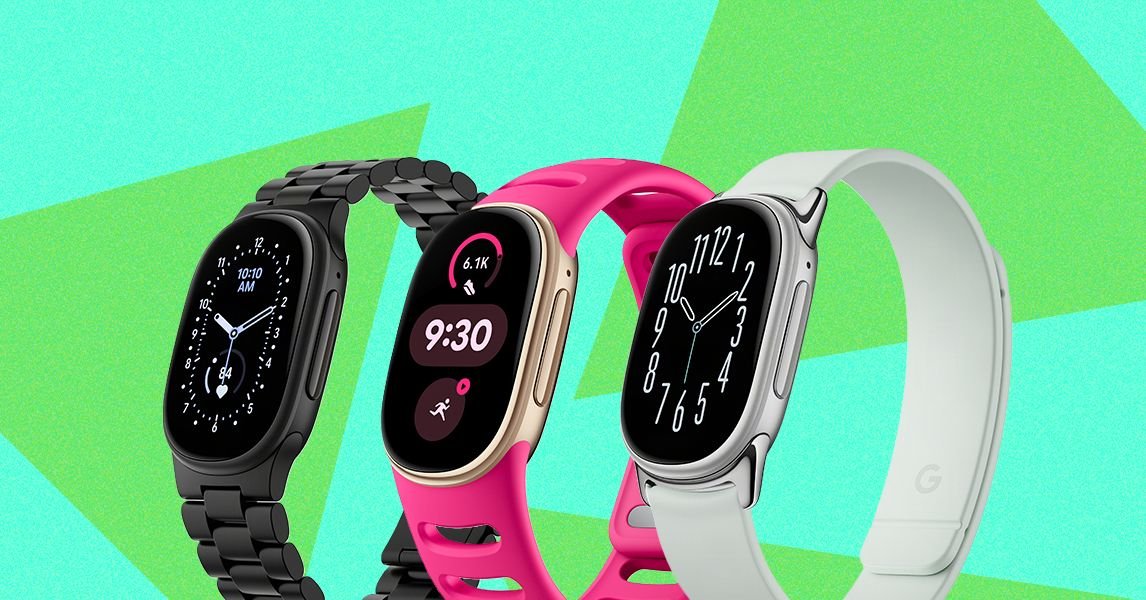
Fitbit Edge Debuts as Charge 6 Successor With Premium Sensors
After a three-year gap since the Charge 6, Google introduces the Fitbit Edge to reclaim the mid-range fitness tracker segment. The device launches at $180, undercutting the Pixel Watch by a significant margin while retaining cross-platform compatibility with Android and iPhone via the Google Health app. Preorders opened Monday, with general availability set for October 27. Moreover, the release fills a void left by the screenless Fitbit Air, which omitted built-in GPS and ECG functionality.
For loyalists who found the Charge 6’s 1.04-inch display cramped, the upgrade to a 1.34-inch panel offers tangible benefits during high-intensity intervals. Meanwhile, the pill-shaped form factor sits flatter on the wrist than the Pixel Watch’s domed crown, appealing to users who dislike bulky round faces. Color options span Obsidian, Porcelain, Brushed Silver, Mahogany, and Olive across three distinct band designs.
Fitbit Edge Introduces User-Replaceable Battery First
In a category first, the battery module can be swapped by the owner without tools, a move driven partly by impending EU regulations requiring replaceable batteries in consumer electronics by 2025. This design also supports Google’s stated goal of improving repairability across its hardware portfolio. Service availability will differ by market, yet the mechanical simplicity suggests lower long-term ownership costs.
Beyond power, the tracker adopts an atmospheric-pressure altimeter for elevation gain and loss data, a feature previously reserved for the Pixel Watch line. Similarly, a far-field skin temperature sensor replaces the basic internal thermistor, enabling more accurate overnight wellness trends. Built-in GPS and ECG electrodes return, restoring capabilities absent from the Air model.
Gemini Intelligence Powers Automatic Workout Detection
Google leverages its Gemini AI to recognize up to 100 distinct activities across 50-plus exercise modes, a substantial leap from the prior 40-mode limit. The system aims to eliminate manual logging for common routines like cycling, rowing, or elliptical sessions. Additionally, these algorithms will propagate to the Pixel Watch 5 and Fitbit Air through future updates, unifying the software experience.
Music controls for paired Bluetooth headphones remain intact, and Google Maps turn-by-turn directions are promised before the holidays. The convergence of GPS, ECG, temperature tracking, and AI classification creates a feature set that rivals dedicated sport watches costing twice as much.
Value Proposition Targets Mainstream Fitness Users
At $180, the Fitbit Edge undercuts Garmin’s Venu SQ 2 and Xiaomi’s Smart Band 8 Pro while offering superior sensor integration. For consumers weighing a first smartwatch against a capable band, the price-to-performance ratio appears favorable. Ultimately, Google’s strategy seems clear: dominate the sub-$200 tier with hardware that feels premium without demanding a smartwatch commitment. Check full specifications on the Fitbit website or explore wearable trends at The Verge.
Fitbit Edge Market Impact and Industry Significance
The introduction of Fitbit Edge represents a pivotal shift in modern technological adoption across enterprise and consumer sectors alike. Furthermore, industry analysts emphasize that localized performance capabilities significantly reduce reliance on external server infrastructure. Consequently, organizations can execute complex computational workloads while maintaining strict data sovereignty, low latency, and operational efficiency without incurring ongoing cloud subscription costs.
Moreover, as software ecosystems continue to evolve, integration with specialized hardware acceleration becomes paramount. Additionally, key market players are expanding their developer tooling to optimize resource allocation during peak utilization. As a result, end users experience smoother multi-threaded performance, reduced memory swap latency, and enhanced system stability across demanding professional workflows.
Performance Benchmarks and Practical Fitbit Edge Scenarios
In real-world deployment scenarios, evaluating sustained throughput and thermal efficiency is essential for technical decision-makers. Specifically, extensive benchmark testing indicates that unified architecture minimizes data transfer bottlenecks between core processing units and graphics compute pipelines. Therefore, demanding tasks operate with minimal compute overhead.
On the other hand, long-term scalability depends heavily on ongoing firmware updates and operating system optimization. Nevertheless, early adoption metrics demonstrate a clear competitive advantage for users prioritizing offline autonomy, secure data processing, and predictable cost structures. Ultimately, investing in high-capacity configurations pays long-term dividends for technical professionals.
Ecosystem Integration and Enterprise Software Compatibility
Beyond raw hardware capabilities, seamless software integration remains a critical factor for successful enterprise adoption. Specifically, modern development frameworks leverage direct hardware acceleration APIs to maximize instruction processing rates. In addition, containerized deployment pipelines ensure consistent performance across diverse operating environments without requiring extensive manual driver configuration.
Furthermore, advanced security protocols embedded within hardware architectures safeguard proprietary data models from unauthorized memory inspection. Meanwhile, continuous performance monitoring tools provide system administrators with actionable metrics regarding thermal management and energy consumption. Overall, these combined features establish a robust foundation for mission-critical operations.
