


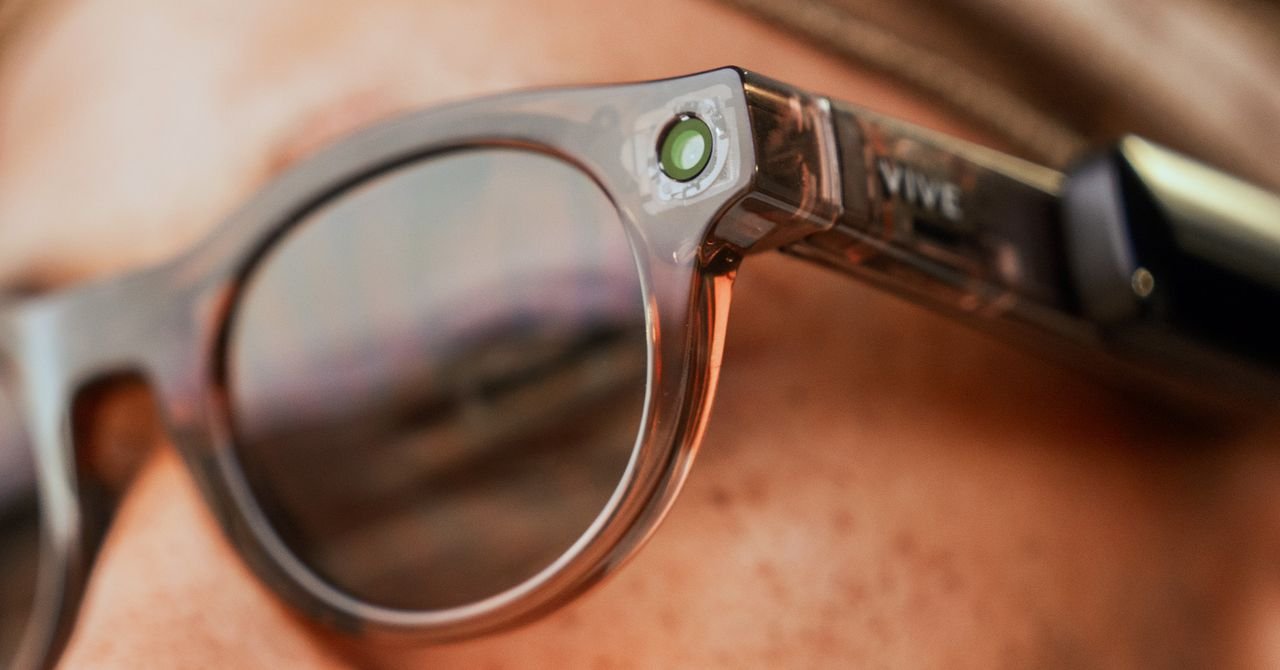
New Vive Eagle Smart Glasses Prioritize User Privacy
The market for wearable technology is witnessing a significant pivot as HTC releases the Vive Eagle smart glasses. By directly addressing the privacy controversies that have historically plagued similar devices from Meta, the company is carving out a niche for privacy-conscious consumers. Specifically, the device emphasizes local data storage and clear physical indicators to maintain trust.
Furthermore, the hardware design is surprisingly sleek, offering two distinct styles that mimic traditional eyewear. Despite the compact form factor, the device manages to integrate cameras, microphones, and speakers effectively. Consequently, the user experience feels natural rather than invasive, which is a common critique of existing smart eyewear options.
Security Standards of Vive Eagle Smart Glasses
One of the most impressive aspects of the Vive Eagle smart glasses is the deliberate approach to data management. Unlike many competitors that default to automatic cloud synchronization, HTC requires manual intervention for media transfers. Therefore, users maintain complete control over what footage leaves the device. Additionally, the encryption protocols ensure that even if the glasses are misplaced, the stored information remains inaccessible to unauthorized parties.
Moreover, the integration of an AI assistant provides significant utility without the typical privacy trade-offs. Because the Vive Eagle smart glasses do not mandate a personal account, the AI functions as a neutral tool rather than a data-gathering engine. This choice is vital for users who want the benefits of AI-driven productivity without the risk of their personal communication history being mined for advertising purposes. For further reading on current trends, check out OpenAI’s latest updates regarding secure AI implementation.
Battery Life and Vive Eagle Smart Glasses Usability
In terms of daily usage, the Vive Eagle smart glasses perform reliably. With 4.5 hours of continuous music playback and 36 hours of standby time, the battery life is sufficient for most users. Furthermore, the optional $49 Power Boost clip-on battery ensures that the device can survive a full day of heavy activity. Ultimately, the modular approach to battery life demonstrates that HTC has thought through the practical needs of modern commuters.
Finally, the company has positioned the device as a transparent solution in an increasingly opaque technology landscape. By making the recording process visible and the data storage local, HTC is attempting to set a new standard for ethical wearable design. Whether this approach leads to widespread adoption remains to be seen, but the focus on user autonomy is a welcome development in the industry.
Vive Eagle Smart Glasses Market Impact and Industry Significance
The introduction of Vive Eagle Smart Glasses represents a pivotal shift in modern technological adoption across enterprise and consumer sectors alike. Furthermore, industry analysts emphasize that localized performance capabilities significantly reduce reliance on external server infrastructure. Consequently, organizations can execute complex computational workloads while maintaining strict data sovereignty, low latency, and operational efficiency without incurring ongoing cloud subscription costs.
Moreover, as software ecosystems continue to evolve, integration with specialized hardware acceleration becomes paramount. Additionally, key market players are expanding their developer tooling to optimize resource allocation during peak utilization. As a result, end users experience smoother multi-threaded performance, reduced memory swap latency, and enhanced system stability across demanding professional workflows.
Performance Benchmarks and Practical Vive Eagle Smart Glasses Scenarios
In real-world deployment scenarios, evaluating sustained throughput and thermal efficiency is essential for technical decision-makers. Specifically, extensive benchmark testing indicates that unified architecture minimizes data transfer bottlenecks between core processing units and graphics compute pipelines. Therefore, demanding tasks operate with minimal compute overhead.
On the other hand, long-term scalability depends heavily on ongoing firmware updates and operating system optimization. Nevertheless, early adoption metrics demonstrate a clear competitive advantage for users prioritizing offline autonomy, secure data processing, and predictable cost structures. Ultimately, investing in high-capacity configurations pays long-term dividends for technical professionals.
