


The Nikon Small World in Motion contest has removed its 2026 winning entry after finding that it broke the rules on generative AI. The decision followed weeks of debate among scientists. Many of them doubted that the award-winning microscope video showed real biology at all.
Why Nikon Small World in Motion Pulled the Winning Entry
Nikon reviewed the video and its supporting materials again. It also consulted members of its judging panel. Contest spokesperson Remi Yuter then told Gizmodo that the winning video did not comply with the competition’s generative AI rules.
Nikon has already adjusted the rankings. Yuter stressed that the decision rests only on eligibility rules. It is not a judgment of the entrant’s reputation, scientific contributions, or intent. The entry no longer appears on the contest’s winners page.
What Scientists Noticed in the Video
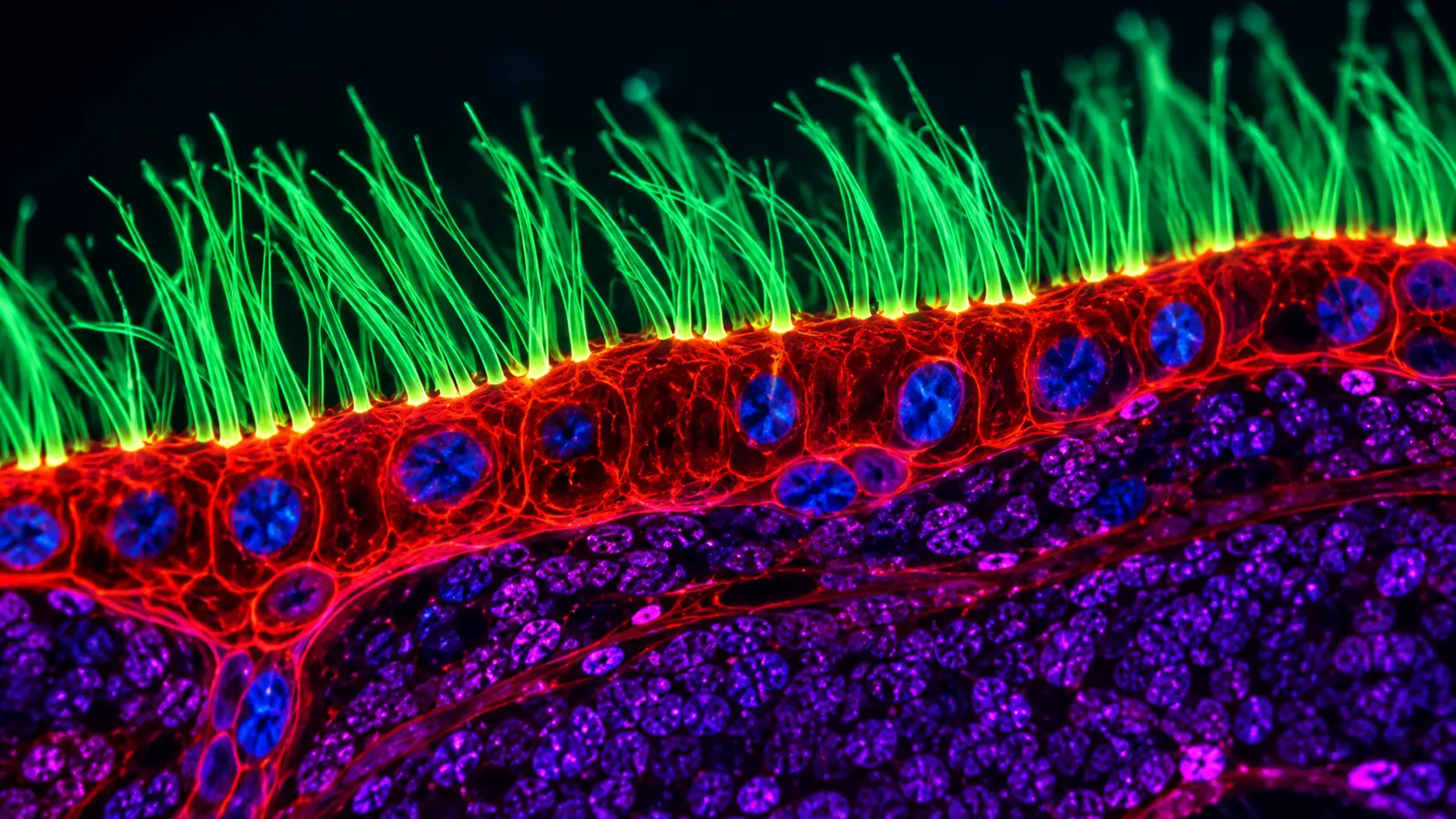
The disqualified entry came from Ning Xu, an optical engineer at the National University of Singapore. His video showed cilia in airway tissue samples. The samples came from a child with primary ciliary dyskinesia (PCD), a condition that affects how cilia move.
Experts soon spotted red, blue, and purple structures that do not appear to exist in biology. In addition, the clip carried a SynthID watermark, which flags AI-generated content.
Xu explained that the video began as real research footage. However, he said he used generative AI for “postprocessing.” Even so, the structures in the final clip look either altered beyond recognition or invented outright.
A Specialist Raises Concerns About PCD Patients
Robert Hirst, a scientist at the University of Leicester, spoke to the BBC. He has diagnosed PCD for 20 years by studying cilia waveform, length, and cell size and shape. According to Hirst, the video looks nothing like cilia from PCD patients.
He also warned about the wider damage. The incident, he said, hurt PCD patients, doctors, and support networks around the world. For families who rely on accurate images, that concern carries real weight.
Who Won Instead
Nguyen Nam Nhat of Vietnam now holds the top spot. His video features a roundworm and a single-celled organism called Dileptus.
Meanwhile, Nikon says it will revisit its rules and evaluation procedures for future entries. That promise suggests the organizers see a gap in how they screen AI use.
Why Generative AI Does Not Belong in Scientific Images
Scientific images work as data. Developmental biologist Melanie White, of the University of Queensland, told Nature that scientists must trust that an image rests on the underlying measurement. Generative AI undermines that trust.
Older guidelines already asked scientists to disclose when they color images. Yet generative AI differs in kind, not just in degree. Instead of adjusting existing pixels, it fabricates new ones. As a result, a viewer can no longer tell which details came from the sample and which came from a model.
What Comes Next for Photomicography Contests
The Nikon Small World in Motion decision may push other competitions to act. Clear rules, mandatory disclosure, and stronger checks could all help. Moreover, entrants will likely need to keep raw footage ready for review.
For now, the case shows how quickly AI-processed media can blur the line between science and art.
