


Sixty Year Mission: The Sixty-Year Mission Explores Sci-Fi Tech Prophecy
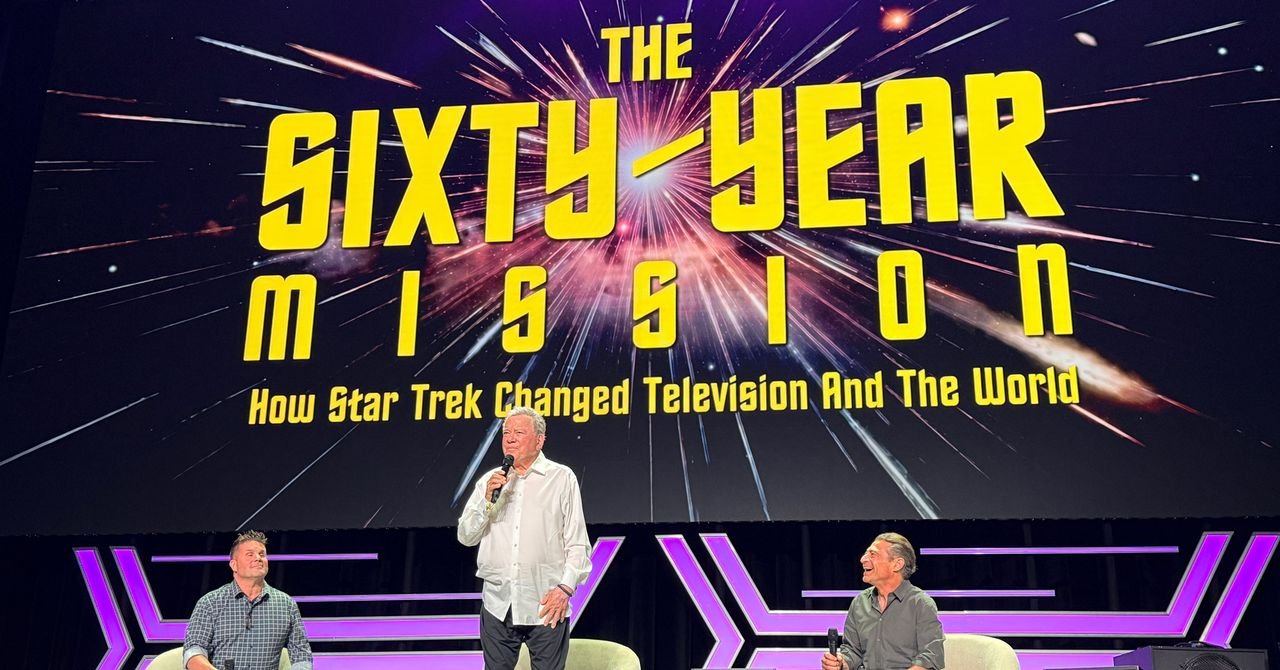
The Sixty-Year Mission documentary premiered at New York Comic Con with a focus that extends beyond nostalgia into technology forecasting. William Shatner’s appearance at the Regal Times Square screening underscored how the original series’ speculative devices—communicators, tricorders, PADDs—anticipated smartphones, diagnostic sensors, and tablet computing. Director Mark A. Altman structured the film to trace these predictive threads from 1966 scripts to contemporary engineering labs.
Altman’s background producing the Inglorious Treksperts podcast provided research infrastructure for the project. Furthermore, the production team cataloged how Roddenberry’s technical consultants, many drawn from NASA and aerospace contractors, grounded fictional systems in plausible physics. This methodology mirrors modern design fiction practices where technologists prototype future interfaces through narrative scenarios.
Sixty Year Mission: From Podcast Archives to Theatrical Data Visualization
The Sixty-Year Mission leverages audio-first content development, a workflow increasingly common in tech journalism. Consequently, hundreds of podcast interview hours became searchable transcripts, enabling pattern recognition across decades of franchise history. Jonathan Frakes and Brent Spiner discussed how Next Generation’s LCARS interface influenced actual UI/UX paradigms, while Simon Pegg addressed the Kelvin timeline’s modernized aesthetic.
George Takei’s testimony about internment camp experiences added biometric authenticity to the franchise’s diversity claims. Meanwhile, Mary L. Trump’s commentary on Nichelle Nichols highlighted how representation metrics correlate with audience expansion—a principle now quantified through engagement analytics. Karim Diané’s casting as the first openly gay Klingon generated measurable social sentiment spikes, demonstrating real-time diversity impact tracking.
The Sixty-Year Mission Maps Franchise Evolution Algorithms
Roddenberry’s dual mandate—progressive social vision within militarized command structures—creates a tension that Altman argues fuels narrative durability. Additionally, this dialectic mirrors platform governance challenges: balancing open community standards with centralized safety enforcement. The documentary illustrates how Trek’s “phasers and diversity” framework prefigured modern trust-and-safety architecture.
Shatner’s executive producer credit reflects a broader trend of legacy talent acquiring equity in franchise ecosystems. For instance, his initial transactional view—”I got a regular paid job”—evolved into long-term brand stewardship, paralleling how early platform adopters become stakeholder-advocates. The film’s hybrid release strategy—theatrical event followed by targeted streaming—tests revenue optimization models for archival assets.
Digital Preservation Meets Generative Storytelling
The documentary’s production utilized AI-assisted archival restoration for degraded 16mm footage, showcasing preservation technology that could scale across media libraries. Nevertheless, Altman emphasized human curatorial judgment over algorithmic automation, particularly for culturally sensitive material like Takei’s internment narrative. This hybrid approach aligns with emerging best practices in computational archival science.
Overall, The Sixty-Year Mission demonstrates how a sixty-year-old property remains technologically relevant through continuous reinterpretation. NASA’s historical collaboration with Star Trek exemplifies the feedback loop between speculative fiction and actual innovation—a cycle that modern R&D departments increasingly formalize.
Sixty Year Mission Market Impact and Industry Significance
The introduction of Sixty Year Mission represents a pivotal shift in modern technological adoption across enterprise and consumer sectors alike. Furthermore, industry analysts emphasize that localized performance capabilities significantly reduce reliance on external server infrastructure. Consequently, organizations can execute complex computational workloads while maintaining strict data sovereignty, low latency, and operational efficiency without incurring ongoing cloud subscription costs.
Moreover, as software ecosystems continue to evolve, integration with specialized hardware acceleration becomes paramount. Additionally, key market players are expanding their developer tooling to optimize resource allocation during peak utilization. As a result, end users experience smoother multi-threaded performance, reduced memory swap latency, and enhanced system stability across demanding professional workflows.
Performance Benchmarks and Practical Sixty Year Mission Scenarios
In real-world deployment scenarios, evaluating sustained throughput and thermal efficiency is essential for technical decision-makers. Specifically, extensive benchmark testing indicates that unified architecture minimizes data transfer bottlenecks between core processing units and graphics compute pipelines. Therefore, demanding tasks operate with minimal compute overhead.
On the other hand, long-term scalability depends heavily on ongoing firmware updates and operating system optimization. Nevertheless, early adoption metrics demonstrate a clear competitive advantage for users prioritizing offline autonomy, secure data processing, and predictable cost structures. Ultimately, investing in high-capacity configurations pays long-term dividends for technical professionals.
Ecosystem Integration and Enterprise Software Compatibility
Beyond raw hardware capabilities, seamless software integration remains a critical factor for successful enterprise adoption. Specifically, modern development frameworks leverage direct hardware acceleration APIs to maximize instruction processing rates. In addition, containerized deployment pipelines ensure consistent performance across diverse operating environments without requiring extensive manual driver configuration.
Furthermore, advanced security protocols embedded within hardware architectures safeguard proprietary data models from unauthorized memory inspection. Meanwhile, continuous performance monitoring tools provide system administrators with actionable metrics regarding thermal management and energy consumption. Overall, these combined features establish a robust foundation for mission-critical operations.
