


Here’s the encouraging part: Qualcomm wants everyone to know that a new wave of budget laptops is coming. The company insists these machines won’t feel cheap. Here’s the catch: Qualcomm’s new Snapdragon C chips target entry-level laptops. They may not actually win on price or on power.
Qualcomm teased its Snapdragon “Compute” platform ahead of Computex 2026. At the time, it held back the specifications. That changed this past Wednesday, when the company finally revealed the chip’s details. The results landed about where we expected. Snapdragon C runs on a 6nm process and uses eight of Qualcomm’s older Kryo CPU cores. It skips the newer Oryon architecture found in the Snapdragon X2 lineup. Those cores run at 3GHz with 2MB of cache. The chip pairs them with an Adreno GPU capped at just 900MHz. Qualcomm positions this squarely as a low-power option for “entry-tier laptops” at “accessible price points.”
How Snapdragon C Stacks Up Against Intel
Qualcomm wants these ARM-based machines to undercut laptops running Intel’s Core 3 chip, known as “Wildcat Lake,” on price. For context, we’ve already tested an 8-core Intel Core 7 350 inside the $900 Lenovo IdeaPad Slim 3i. We also tested an Intel Core 5 320 inside the $800 Dell XPS 13 with 16GB of RAM. Neither chip fully beat Apple’s $700 MacBook Neo across every benchmark. Still, they remain the strongest options currently available for lightweight PCs under $1,000.
Qualcomm isn’t going head-to-head with Intel’s current lineup, though. Instead, the company compares Snapdragon C to an older, lower-tier Intel chip: the Twin Lake N250. That chip debuted in 2025 with four efficiency cores built for tight power budgets. It mostly appeared in a handful of budget laptops and mini PCs. Qualcomm claims its Snapdragon C beats the N250 by 44% in Cinebench 2026 single-core tests, despite doubling the core count. It also claims a 24% lead in multi-core rendering. The company points to more than double the power efficiency, too. Whether that comparison matters much is debatable. Few people ever owned a Twin Lake-powered PC in the first place.
What These Budget Laptops Will Actually Offer
Snapdragon C is clearly built for a bare-bones laptop experience. Based on the published specs, expect displays capped around FHD+, or roughly 1200p resolution. These laptops will support just one external 4K monitor at 60Hz. Connectivity tops out at Wi-Fi 6E and Bluetooth 6.0. When Qualcomm first introduced the platform, it pitched these laptops as starting around $300.
Pricing Reality Is Already Shifting
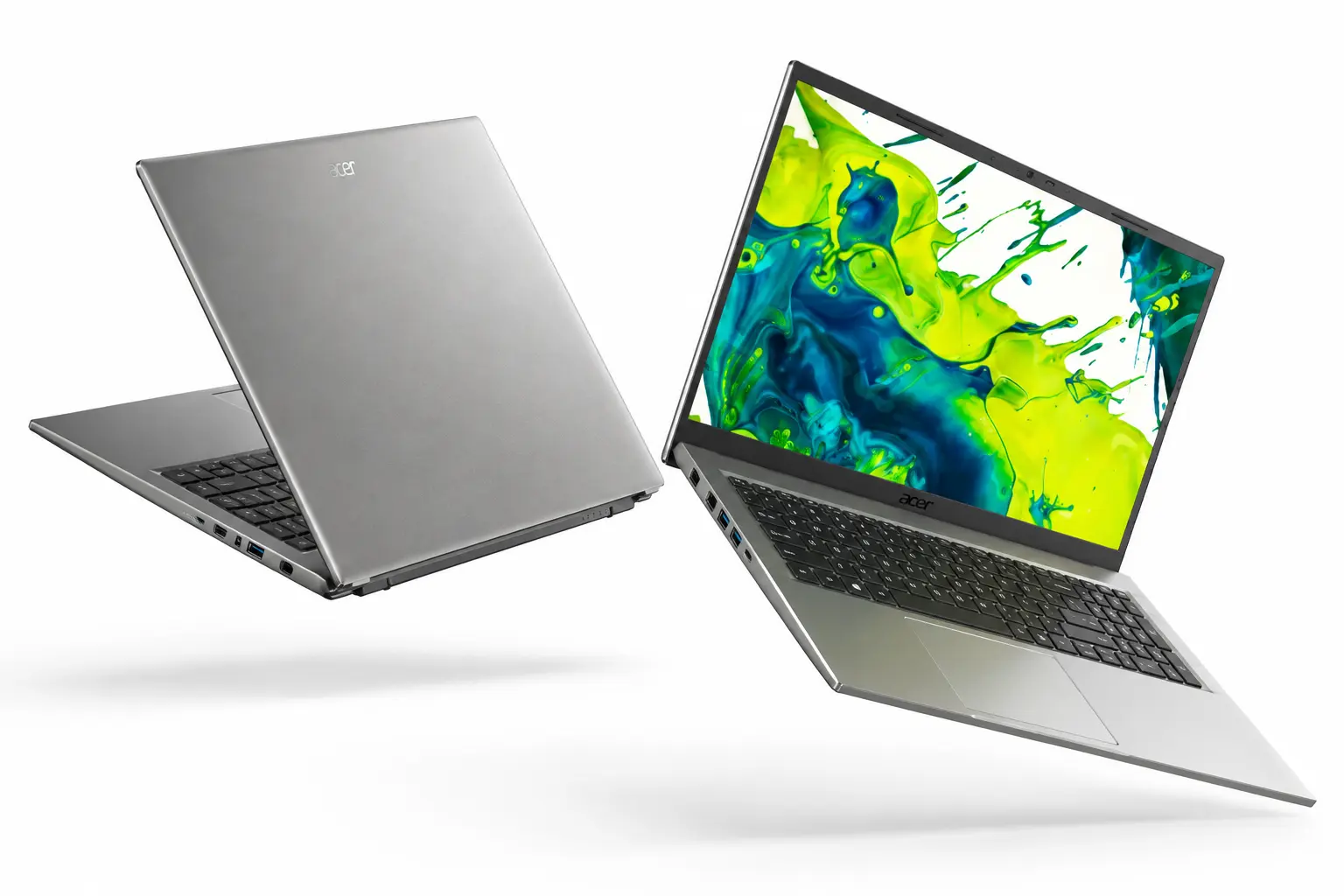
If 2026 has taught us anything, it’s that announced prices rarely survive contact with the market for long. The first Snapdragon C laptop, Acer’s Aspire Go 15, launched at Computex without a confirmed price. Since then, VideoCardz spotted a U.K. Amazon listing. It pegged the laptop at 499 euros, or roughly $562, for a configuration with 8GB of RAM and 128GB of storage. At that price, shoppers might reasonably consider a more capable laptop instead.
The RAM Problem Nobody Can Ignore
Acer’s version of the laptop pairs 512GB of storage with just 8GB of RAM. That’s likely the platform’s biggest weakness. Windows 11 simply isn’t optimized to run well with less than 16GB. Microsoft is actively working to improve performance on lower-spec hardware, but that work isn’t finished yet. Until it is, it’s hard to recommend a laptop that struggles just to run the operating system alongside a browser with a dozen open tabs.
