


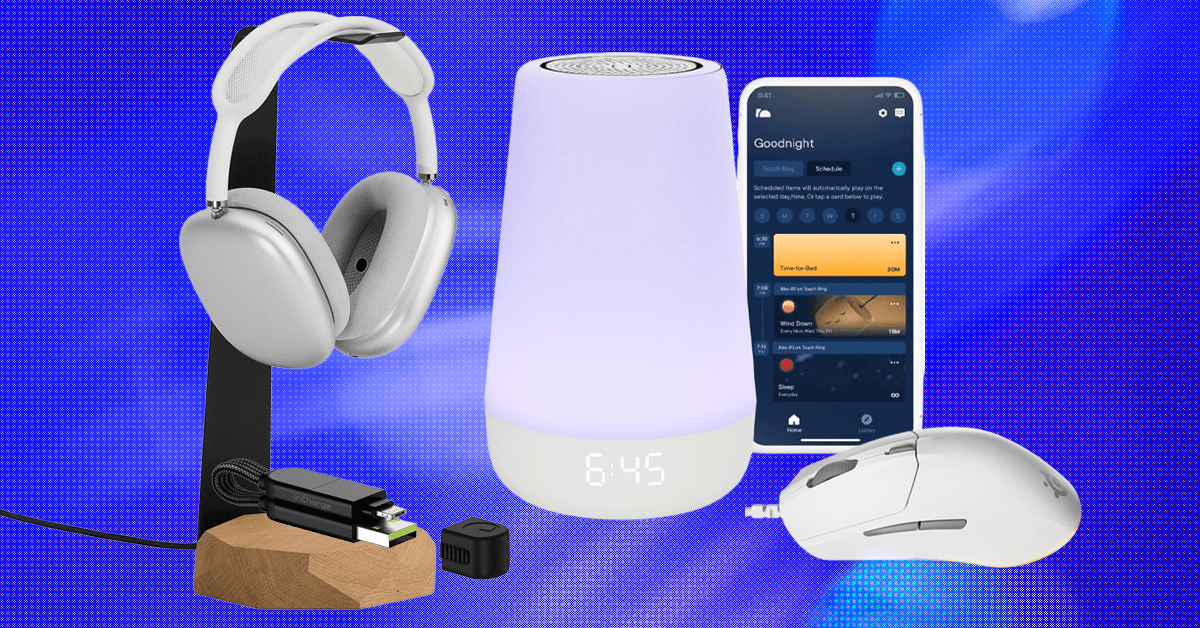
Best Tech Gifts: Expert Picks: Tech Gifts Under $100 That Impress
Holiday shoppers seeking tech gifts under $100 often face inflated prices and misleading marketing. Our testing lab evaluated over thirty devices across audio, lighting, and smart home segments to separate genuine value from seasonal hype. The results reveal several standout products worthy of gifting.
Leading the audio category, Tribit’s StormBox 2 packs dual-firing drivers and passive radiators into a seven-inch pill form. Thirty watts of output and a physical bass boost button deliver surprising low-end presence. Twenty-four hour battery life supports full-day gatherings, while stereo pairing expands the soundstage when budgets allow a second unit.
Furthermore, Govee’s Neon Rope Light Strip 2 solves a common installation headache. The integrated diffuser eliminates the need for recessed channels, allowing direct surface mounting with included metal brackets. App control covers scheduling, color animation, and custom scene creation. Occasional blocky transitions and a learning curve for the interface represent minor trade-offs.
Smart Speaker Tech Gifts Under $100 for Connected Homes
Additionally, Amazon refreshed its Echo Dot lineup with the Max variant. The spherical design houses improved drivers for fuller sound reproduction. Enhanced far-field microphones capture wake words more reliably in noisy environments. Existing Alexa routines and smart home groups migrate effortlessly.
Moreover, multi-device wireless chargers from Satechi and Nomad now support simultaneous phone, watch, and earbud charging. Thirty-watt total output handles modern flagship devices at full speed. Compact footprints suit nightstands and desk setups equally well.
Meanwhile, trackpad and mouse alternatives from Logitech’s Signature series blend ergonomics with multi-device Bluetooth switching. Three-device pairing lets users toggle between laptop, tablet, and desktop instantly. Two-year battery life minimizes maintenance.
Budget-Friendly Tech Gifts Under $100 for Creators
Specifically, content creators benefit from USB microphones like the Fifine AmpliGame A8 and HyperX SoloCast. Cardioid pickup patterns reject background noise while capturing clear vocal reproduction. Zero-latency monitoring and gain control knobs provide studio-like control.
Consequently, portable SSD drives from Samsung and Crucial now offer 1TB capacities with 1,000MB/s transfer speeds. Ruggedized enclosures withstand drops and vibration. These drives accelerate workflow for photographers, videographers, and students managing large project files.
In terms of Best Tech Gifts, Ultimately, careful selection yields tech gifts under $100 that recipients genuinely use daily. Wirecutter’s annual roundup provides additional perspectives. PCMag’s budget gift guide covers complementary categories. Informed decisions prevent post-holiday regret.
Best Tech Gifts Market Impact and Industry Significance
The introduction of Best Tech Gifts represents a pivotal shift in modern technological adoption across enterprise and consumer sectors alike. Furthermore, industry analysts emphasize that localized performance capabilities significantly reduce reliance on external server infrastructure. Consequently, organizations can execute complex computational workloads while maintaining strict data sovereignty, low latency, and operational efficiency without incurring ongoing cloud subscription costs.
Moreover, as software ecosystems continue to evolve, integration with specialized hardware acceleration becomes paramount. Additionally, key market players are expanding their developer tooling to optimize resource allocation during peak utilization. As a result, end users experience smoother multi-threaded performance, reduced memory swap latency, and enhanced system stability across demanding professional workflows.
Performance Benchmarks and Practical Best Tech Gifts Scenarios
In real-world deployment scenarios, evaluating sustained throughput and thermal efficiency is essential for technical decision-makers. Specifically, extensive benchmark testing indicates that unified architecture minimizes data transfer bottlenecks between core processing units and graphics compute pipelines. Therefore, demanding tasks operate with minimal compute overhead.
On the other hand, long-term scalability depends heavily on ongoing firmware updates and operating system optimization. Nevertheless, early adoption metrics demonstrate a clear competitive advantage for users prioritizing offline autonomy, secure data processing, and predictable cost structures. Ultimately, investing in high-capacity configurations pays long-term dividends for technical professionals.
Ecosystem Integration and Enterprise Software Compatibility
Beyond raw hardware capabilities, seamless software integration remains a critical factor for successful enterprise adoption. Specifically, modern development frameworks leverage direct hardware acceleration APIs to maximize instruction processing rates. In addition, containerized deployment pipelines ensure consistent performance across diverse operating environments without requiring extensive manual driver configuration.
Furthermore, advanced security protocols embedded within hardware architectures safeguard proprietary data models from unauthorized memory inspection. Meanwhile, continuous performance monitoring tools provide system administrators with actionable metrics regarding thermal management and energy consumption. Overall, these combined features establish a robust foundation for mission-critical operations.

1 Comment
Pingback: AI Infrastructure Reset Looms as Chinese Models Undercut