


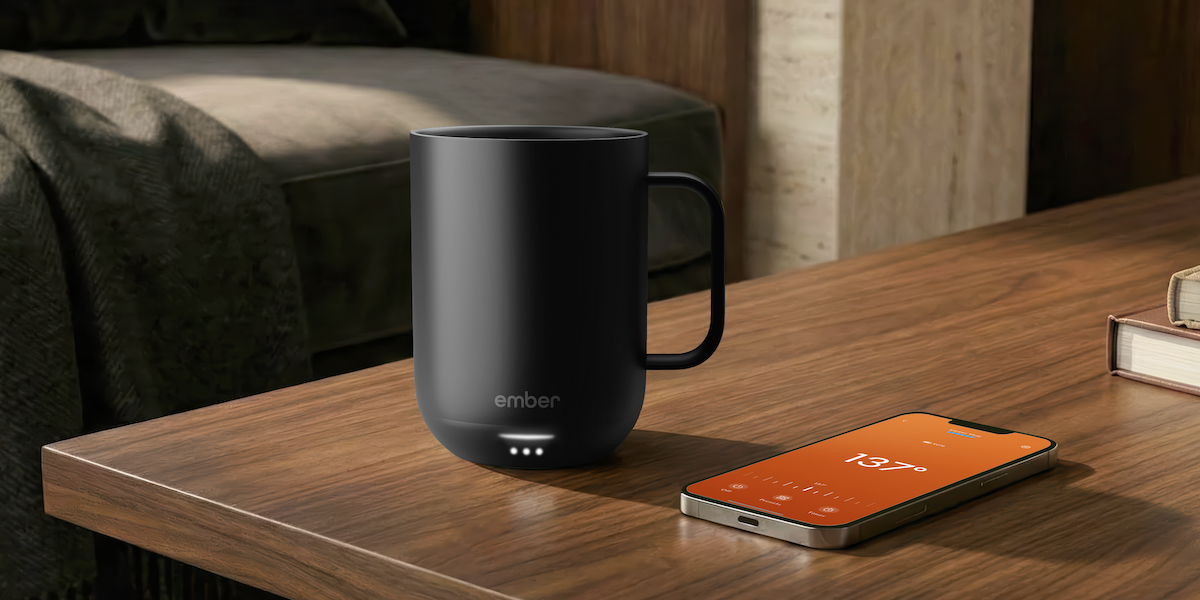
Ember Mug 3 Upgrade Brings Physical Controls to Users
Temperature control technology has seen a significant shift with the launch of the Ember Mug 3, a device designed to keep your coffee or tea at a consistent heat for hours. Many users previously struggled with app-based interfaces, but this new release prioritizes accessibility through physical hardware. As a result, the Ember Mug 3 allows you to manage your drinking experience without ever touching a smartphone, making it an ideal companion for chilly evenings.
Specifically, the Ember Mug 3 incorporates a button on the bottom of the unit that allows for quick temperature adjustments. By pressing this button, users can cycle through five heat presets starting at 125 degrees Fahrenheit. Furthermore, the ability to increase heat in five-degree increments up to 145 degrees gives drinkers granular control over their experience. This update effectively bypasses common connectivity issues associated with older smart mugs, providing a more reliable user experience for those who prefer manual input over digital apps.
Enhanced Features of the Ember Mug 3
Beyond the new controls, the Ember Mug 3 includes several practical refinements. For instance, the mug now features a sliding lid that significantly reduces the risk of spills, a feature long requested by the community. Additionally, the device is now top-rack dishwasher-safe, which saves time on cleanup compared to previous models. Although it is important to note that the mug remains unsuitable for microwave use, the three-hour battery life ensures that your beverage stays warm through long reading sessions or work meetings.
Ultimately, the Ember Mug 3 balances convenience with high-end utility. While the button placement on the base remains a slight ergonomic challenge, the overall improvements to the hardware design outweigh this small inconvenience. Whether you choose the 10-ounce model starting at $129 or the larger 14-ounce version for $149, the variety of available colors ensures there is an option for every preference. In addition to these physical changes, the companion app remains available for those who want to set specific temperature profiles for different types of tea or coffee, such as 132 degrees for green tea or 136 degrees for black coffee. For more information, visit Ember’s official site to view the full product range.
Ember Mug 3 Market Impact and Industry Significance
The introduction of Ember Mug 3 represents a pivotal shift in modern technological adoption across enterprise and consumer sectors alike. Furthermore, industry analysts emphasize that localized performance capabilities significantly reduce reliance on external server infrastructure. Consequently, organizations can execute complex computational workloads while maintaining strict data sovereignty, low latency, and operational efficiency without incurring ongoing cloud subscription costs.
Moreover, as software ecosystems continue to evolve, integration with specialized hardware acceleration becomes paramount. Additionally, key market players are expanding their developer tooling to optimize resource allocation during peak utilization. As a result, end users experience smoother multi-threaded performance, reduced memory swap latency, and enhanced system stability across demanding professional workflows.
Performance Benchmarks and Practical Ember Mug 3 Scenarios
In real-world deployment scenarios, evaluating sustained throughput and thermal efficiency is essential for technical decision-makers. Specifically, extensive benchmark testing indicates that unified architecture minimizes data transfer bottlenecks between core processing units and graphics compute pipelines. Therefore, demanding tasks operate with minimal compute overhead.
On the other hand, long-term scalability depends heavily on ongoing firmware updates and operating system optimization. Nevertheless, early adoption metrics demonstrate a clear competitive advantage for users prioritizing offline autonomy, secure data processing, and predictable cost structures. Ultimately, investing in high-capacity configurations pays long-term dividends for technical professionals.
