


Google Expands Gemini AI Scam Detection Across Android
Google announced a broad expansion of its Gemini AI scam detection capabilities across the Android ecosystem, bringing advanced message analysis to millions of additional devices. The centerpiece is an opt-in setting in Google Messages that leverages Gemini models to assess sender intent in real time, warning users when conversations exhibit hallmarks of social engineering. This move shifts Android messaging security from reactive filtering to proactive intent analysis.
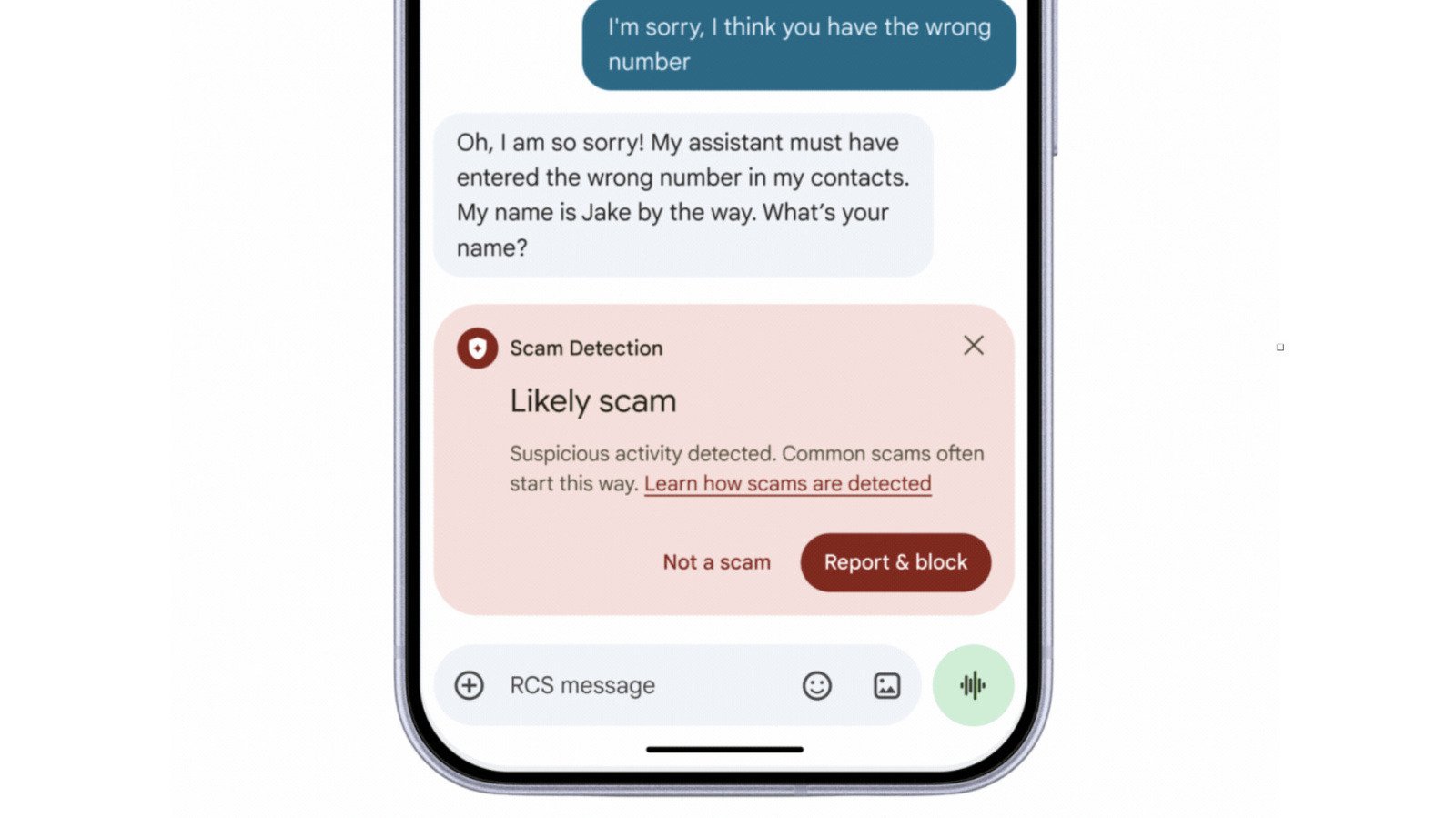
Specifically, the system examines message patterns for deceptive tactics such as false familiarity, urgent requests for personal data, and sudden topic shifts designed to build trust. In one example Google shared, a scammer pretended to share a personal photo, then pivoted to asking for the recipient’s name after being corrected. The AI flagged this behavioral pattern as suspicious before any malicious link was even shared.
Private AI Compute Secures Message Analysis
Message evaluation occurs within Google’s Private AI Compute infrastructure, a secure enclave that encrypts content during processing and prevents access by any external party, including Google itself. This architecture ensures that enabling scam detection does not compromise message privacy. For link safety checks, Gemini Nano performs on-device analysis on supported hardware, verifying URLs before users tap them without transmitting data off the phone.
Meanwhile, the first wave of supported devices includes the Pixel 10 series, Samsung Galaxy S26 lineup, and the newest Galaxy Z Flip and Fold 8 models. Seven additional manufacturers — Honor, Motorola, OPPO, OnePlus, realme, vivo, and Xiaomi — have committed to enabling the feature on their devices later this year. This broad industry adoption signals strong manufacturer confidence in the privacy-preserving approach.
Notification-Level Alerts Catch Scams Earlier
Google has also redesigned how warnings surface. Scam alerts now appear directly in message notifications, so users see the risk indicator without opening the conversation. The new warning interface provides specific context about why a message was flagged and introduces a deliberate pause before links from unknown senders can be opened.
In addition, this friction-based design draws on security research showing that brief interruptions significantly reduce successful phishing clicks. The warnings explain detected risk factors in plain language, such as “sender not in contacts” or “message pattern matches known scam tactics.” This transparency helps users make informed decisions rather than dismissing generic alerts.
Layered Defenses Extend Beyond Messaging
The announcement includes complementary protections rolling out this month. Android 15 devices gain automatic screen-sharing privacy that masks passwords, banking credentials, and credit card CVV codes when Chrome or WebView content is broadcast. Call forwarding protection prevents apps from silently enabling call diversion, while Android warns users who enter MMI codes that scammers often use to hijack incoming calls.
Furthermore, a pilot program with Brazilian banks has already blocked over three million impersonation calls since June by verifying caller identity against bank registries. When verification fails, Android terminates the call and alerts the user. Google plans to expand this verification framework to more financial institutions globally, though specific markets and timelines remain unannounced.
Ultimately, the Gemini AI scam detection expansion reflects a maturing approach to mobile security that combines large language model intelligence with hardware-level privacy guarantees. As messaging threats grow more sophisticated, Android’s layered strategy — on-device analysis, secure cloud processing, and user-facing friction — offers a template for platform-level protection that respects privacy while stopping attacks.
For official technical specifications and hardware documentation, visit AMD Official Specifications or MSI Technical Specs.
Gemini AI Scam Detection Market Impact and Industry Significance
The introduction of Gemini AI Scam Detection represents a pivotal shift in modern technological adoption across enterprise and consumer sectors alike. Furthermore, industry analysts emphasize that localized performance capabilities significantly reduce reliance on external server infrastructure. Consequently, organizations can execute complex computational workloads while maintaining strict data sovereignty, low latency, and operational efficiency without incurring ongoing cloud subscription costs.
Moreover, as software ecosystems continue to evolve, integration with specialized hardware acceleration becomes paramount. Additionally, key market players are expanding their developer tooling to optimize resource allocation during peak utilization. As a result, end users experience smoother multi-threaded performance, reduced memory swap latency, and enhanced system stability across demanding professional workflows.
Performance Benchmarks and Practical Gemini AI Scam Detection Scenarios
In real-world deployment scenarios, evaluating sustained throughput and thermal efficiency is essential for technical decision-makers. Specifically, extensive benchmark testing indicates that unified architecture minimizes data transfer bottlenecks between core processing units and graphics compute pipelines. Therefore, demanding tasks operate with minimal compute overhead.
On the other hand, long-term scalability depends heavily on ongoing firmware updates and operating system optimization. Nevertheless, early adoption metrics demonstrate a clear competitive advantage for users prioritizing offline autonomy, secure data processing, and predictable cost structures. Ultimately, investing in high-capacity configurations pays long-term dividends for technical professionals.
