


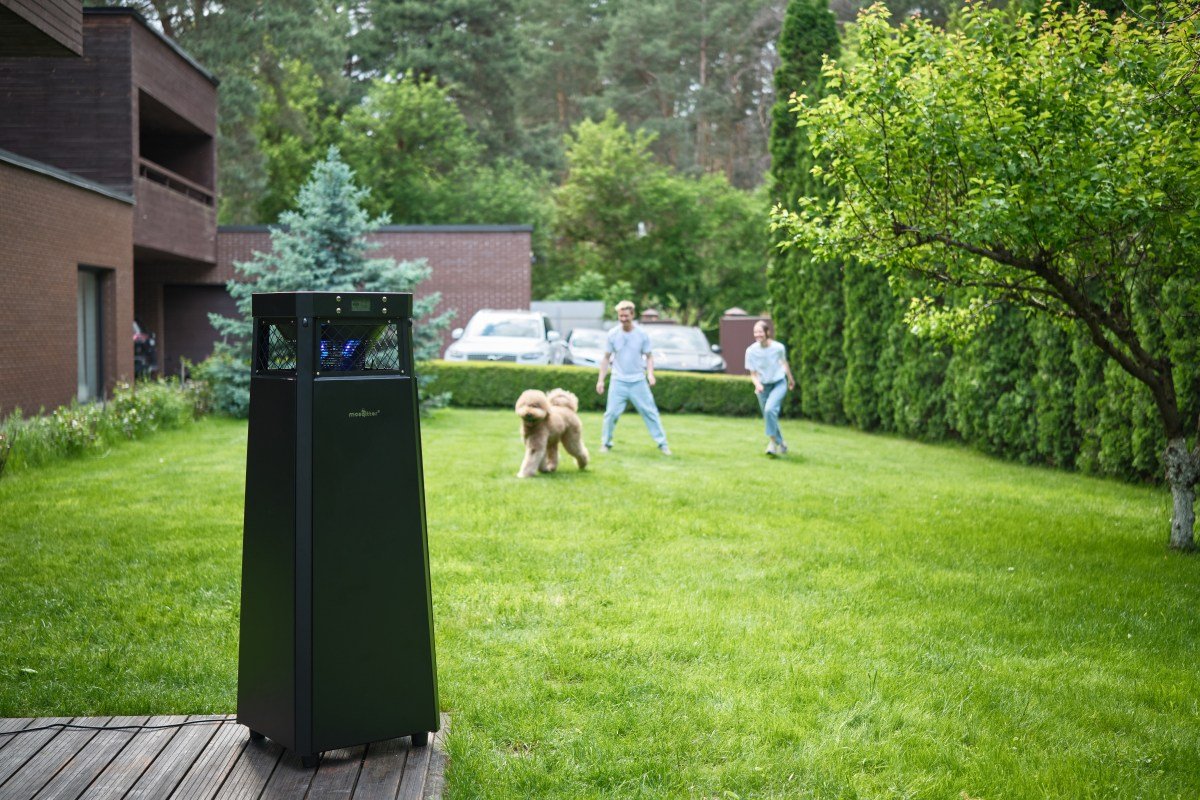
Mosqitter AI Surveillance: From Lethal Traps to Intelligent Sentinels
Mosqitter AI surveillance now transforms ordinary mosquito traps into nodes of a species-identifying sensor grid. The Pennsylvania startup, founded by Anastasiia Romanova, initially built chemical-free devices that mimic human warmth, scent, and breath to capture egg-laying females. That approach yielded a twentyfold deployment increase since 2022, with over 5,000 units now active across five continents. However, the company’s latest pivot adds a layer of computational intelligence that could reshape vector-borne disease response.
Female mosquitoes drive transmission because only they bite. Each gonotrophic cycle—roughly three weeks—produces up to 200 eggs. Intercepting them at host-seeking stage suppresses local populations, yet Romanova recognized that every dead mosquito also carries taxonomic clues. Consequently, the team integrated cameras and onboard processing to photograph each catch and classify it automatically.
Mosqitter AI Surveillance: Three-Tier Verification Ensures Taxonomic Accuracy
Identification relies on a pipeline that blends machine learning with expert oversight. First, a convolutional neural network analyzes wing venation, proboscis length, and scale patterns. Second, results are matched against curated entomological databases. Third, human specialists adjudicate low-confidence predictions. Romanova described the workflow as analogous to a judicial panel where three independent judges must converge before a verdict stands.
This rigor matters for public health. Dengue, Zika, and chikungunya correlate strongly with Aedes species, whereas malaria maps to Anopheles. Misidentification wastes resources and delays targeted action. Additionally, the platform ingests hyperlocal weather—humidity, wind vectors, temperature—creating a multidimensional record for every trap event. Over time, these streams feed predictive models that anticipate population surges before human cases appear.
Climate Shifts Amplify Need for Granular Data
The World Health Organization documented a staggering jump in reported dengue infections, from 6.5 million in 2023 to 14.6 million in 2024. Warmer winters and erratic rainfall enable vectors to colonize higher latitudes and altitudes. Traditional surveillance relies on sentinel clinics and manual trap checks, which lag by weeks. Mosqitter AI surveillance offers continuous, geotagged species counts without field technicians visiting each site.
During this week’s TechCrunch Startup Battlefield in San Francisco, Romanova demonstrated a dashboard that aggregates trap data into risk heat maps. Health departments can zoom from continental trends to neighborhood hotspots. The company’s research roots trace to Ukraine in 2019, with commercial operations launching in 2021. Field validation across varied ecosystems—tropical, temperate, arid—helped the model generalize beyond training distributions.
Building a Planetary Vector Nervous System
Each autonomous unit requires only electricity and internet, making deployment feasible in resource-limited settings. The chemical-free mechanism also aligns with municipal goals to reduce pesticide drift in schools and playgrounds. As the network densifies, Mosqitter plans to share anonymized trend data with academic partners studying climate-driven range expansions.
Ultimately, the ambition extends beyond mosquitoes. The same edge-compute architecture could monitor agricultural pests, pollinator declines, or invasive species. WHO dengue resources highlight the scale of the challenge. By converting passive traps into active intelligence nodes, Mosqitter bets that real-time species resolution will outpace reactive fogging campaigns. TechCrunch’s Battlefield coverage signals growing recognition of climate-health tech convergence.
Mosqitter AI Surveillance Market Impact and Industry Significance
The introduction of Mosqitter AI Surveillance represents a pivotal shift in modern technological adoption across enterprise and consumer sectors alike. Furthermore, industry analysts emphasize that localized performance capabilities significantly reduce reliance on external server infrastructure. Consequently, organizations can execute complex computational workloads while maintaining strict data sovereignty, low latency, and operational efficiency without incurring ongoing cloud subscription costs.
Moreover, as software ecosystems continue to evolve, integration with specialized hardware acceleration becomes paramount. Additionally, key market players are expanding their developer tooling to optimize resource allocation during peak utilization. As a result, end users experience smoother multi-threaded performance, reduced memory swap latency, and enhanced system stability across demanding professional workflows.
Performance Benchmarks and Practical Mosqitter AI Surveillance Scenarios
In real-world deployment scenarios, evaluating sustained throughput and thermal efficiency is essential for technical decision-makers. Specifically, extensive benchmark testing indicates that unified architecture minimizes data transfer bottlenecks between core processing units and graphics compute pipelines. Therefore, demanding tasks operate with minimal compute overhead.
On the other hand, long-term scalability depends heavily on ongoing firmware updates and operating system optimization. Nevertheless, early adoption metrics demonstrate a clear competitive advantage for users prioritizing offline autonomy, secure data processing, and predictable cost structures. Ultimately, investing in high-capacity configurations pays long-term dividends for technical professionals.
Ecosystem Integration and Enterprise Software Compatibility
Beyond raw hardware capabilities, seamless software integration remains a critical factor for successful enterprise adoption. Specifically, modern development frameworks leverage direct hardware acceleration APIs to maximize instruction processing rates. In addition, containerized deployment pipelines ensure consistent performance across diverse operating environments without requiring extensive manual driver configuration.
Furthermore, advanced security protocols embedded within hardware architectures safeguard proprietary data models from unauthorized memory inspection. Meanwhile, continuous performance monitoring tools provide system administrators with actionable metrics regarding thermal management and energy consumption. Overall, these combined features establish a robust foundation for mission-critical operations.
