


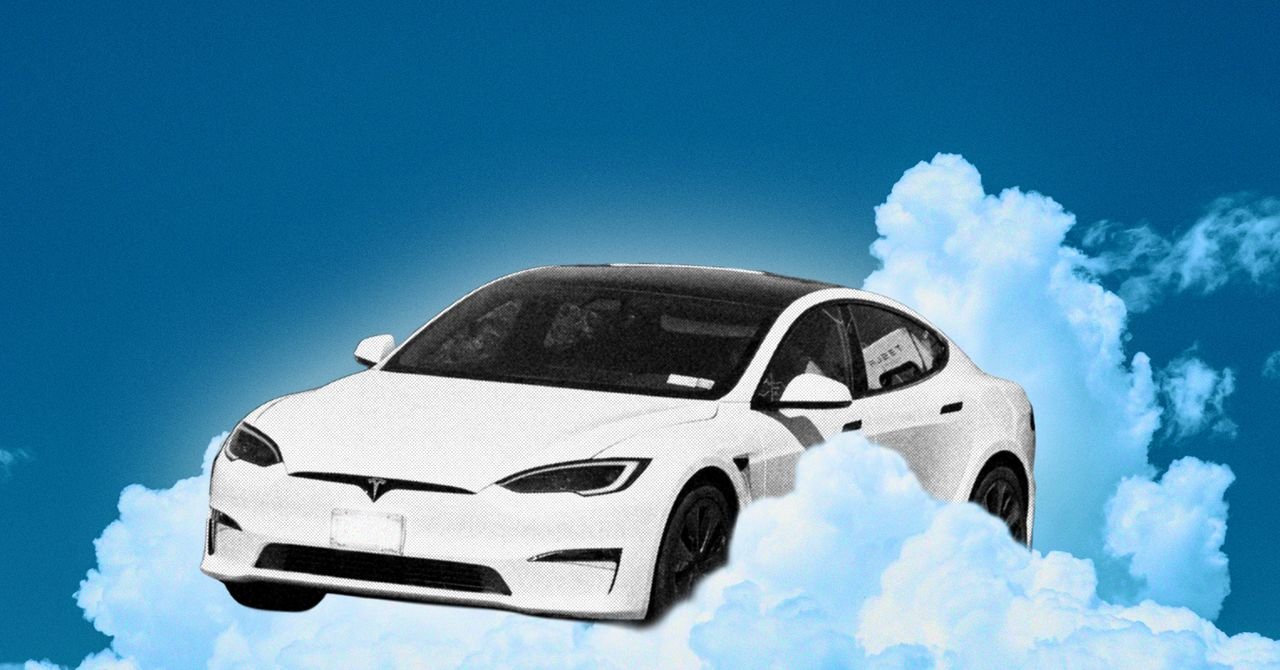
New Tesla Roadster 2 Flight Test Sparks Regulatory Debate
Recent footage from a SpaceX rocket testing site in Texas captured the Tesla Roadster 2 performing a short, abrupt flight maneuver. This demonstration sparked immediate conversation about the potential for personal aerial transport. Although the vehicle successfully left the ground, it did so without a driver to ensure safety during the experimental phase. Production for the Tesla Roadster 2 is currently projected for 2028, but the path from a testing pad to a public road is filled with legal obstacles.
Specifically, experts in aviation law warn that operating such a machine is not as simple as flipping a switch. Because the Tesla Roadster 2 would legally qualify as an aircraft, it must undergo extensive FAA certification. This process could take over a year and requires strict adherence to national airspace protocols. Furthermore, the vehicle’s design is not currently optimized for the safety standards required for civilian flight, a point acknowledged by Tesla leadership during the event.
The Legal Hurdles Facing the Tesla Roadster 2
Operating the Tesla Roadster 2 in a real-world environment will require more than just a powerful engine. Most states maintain strict prohibitions against taking off or landing aircraft outside of designated areas like airports. Consequently, the idea of jumping from a highway into the air is likely to face severe opposition from local authorities. For example, the Federal Aviation Administration maintains strict rules about where aircraft can operate to prevent accidents in populated areas.
Additionally, the transition from a road vehicle to an aircraft necessitates a specialized license. A standard driver’s license will not suffice for the Tesla Roadster 2, meaning owners would need to pursue aviation training. This requirement adds another layer of cost and commitment for potential buyers. Ultimately, users might find themselves limited to operating the vehicle on private land, far away from the public infrastructure that most drivers rely on daily.
Meanwhile, the broader industry is looking toward eVTOL aircraft as a more practical solution for urban congestion. These autonomous vehicles are being designed specifically for short-range travel between pre-approved landing pads. While the Tesla Roadster 2 captures the public imagination with its high-speed performance and unique flight capabilities, it must compete with these established regulatory frameworks. Whether the car can overcome these bureaucratic and physical barriers remains the central question for its future success in the transportation market.
Tesla Roadster 2 Market Impact and Industry Significance
The introduction of Tesla Roadster 2 represents a pivotal shift in modern technological adoption across enterprise and consumer sectors alike. Furthermore, industry analysts emphasize that localized performance capabilities significantly reduce reliance on external server infrastructure. Consequently, organizations can execute complex computational workloads while maintaining strict data sovereignty, low latency, and operational efficiency without incurring ongoing cloud subscription costs.
Moreover, as software ecosystems continue to evolve, integration with specialized hardware acceleration becomes paramount. Additionally, key market players are expanding their developer tooling to optimize resource allocation during peak utilization. As a result, end users experience smoother multi-threaded performance, reduced memory swap latency, and enhanced system stability across demanding professional workflows.
Performance Benchmarks and Practical Tesla Roadster 2 Scenarios
In real-world deployment scenarios, evaluating sustained throughput and thermal efficiency is essential for technical decision-makers. Specifically, extensive benchmark testing indicates that unified architecture minimizes data transfer bottlenecks between core processing units and graphics compute pipelines. Therefore, demanding tasks operate with minimal compute overhead.
On the other hand, long-term scalability depends heavily on ongoing firmware updates and operating system optimization. Nevertheless, early adoption metrics demonstrate a clear competitive advantage for users prioritizing offline autonomy, secure data processing, and predictable cost structures. Ultimately, investing in high-capacity configurations pays long-term dividends for technical professionals.
