


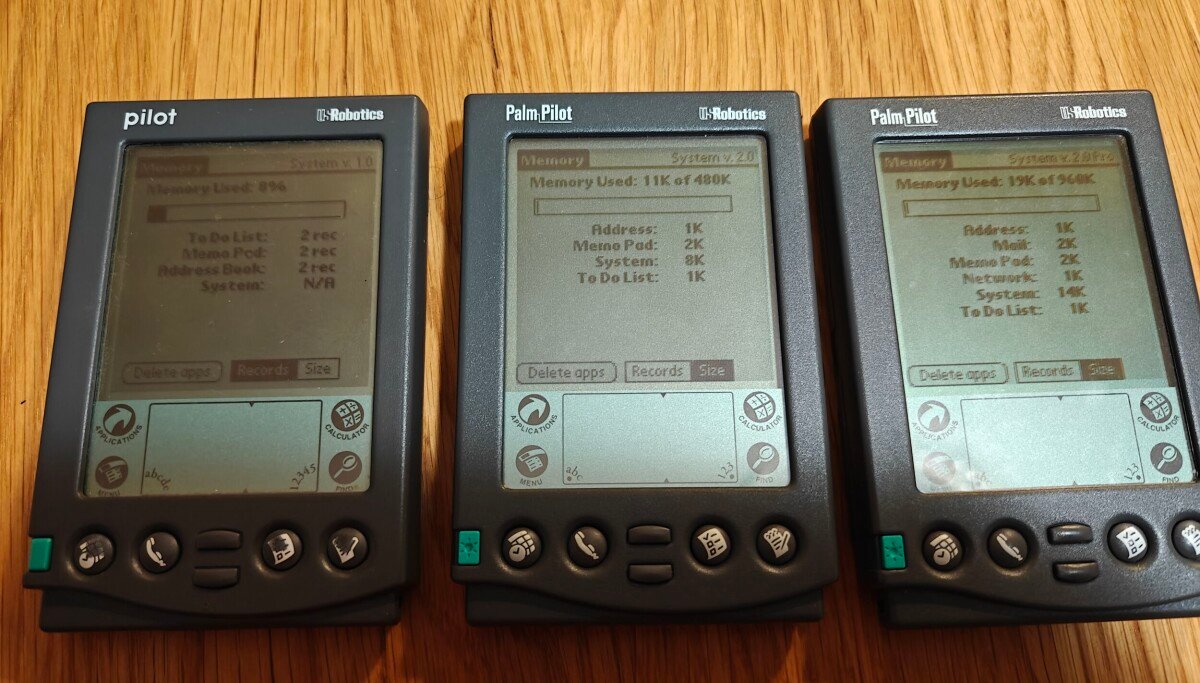
Vintage Data Discovery Revives Aging Palm OS Hardware
A significant discovery in the world of retro computing has occurred as a developer released a long-lost cache of Palm OS tools to the public. These resources, which gathered dust for 25 years, provide a comprehensive look at the software landscape of the late 1990s. Initially, Swedish developer Aaron Ardiri believed his collection of Palm OS tools held little value beyond his own personal nostalgia. That changed when a pull request on his legacy code repository proved that active development for the platform still exists today.
The archive is substantial, spanning roughly one gigabyte of technical documentation, development utilities, and system source code. Specifically, these files help hobbyists understand the internal UI components and system architecture that defined the PalmPilot era. Because much of the original developer documentation vanished from the internet years ago, this release is essential for those attempting to maintain or modify their retro hardware. Furthermore, the availability of these Palm OS tools reduces the barrier to entry for new developers looking to experiment with vintage handheld systems.
The Future of Historical Palm OS Tools
Ardiri is careful to note the boundaries of this release. He avoided including commercial software or firmware images to ensure the archive remains compliant with existing copyright laws. Instead, he focused on providing the foundational elements necessary for community development. Moreover, this repository bridges the gap between historical software and modern utility. It is fascinating to witness how Palm OS tools, originally designed for hardware with limited processing power, can still inspire creative solutions in the current era of high-performance computing.
The project has effectively revitalized interest in mobile history. Beyond just sharing code, Ardiri has actively supported the community by donating dozens of physical devices to preservationists. This ensures that both the software and the hardware remain available for study. Ultimately, the release of these Palm OS tools represents a significant win for digital archeology. As enthusiasts continue to explore these resources, we can expect to see even more innovative projects emerging from the community. You can find more information on the official repository site to see how this legacy code functions in a modern context.
Palm OS Tools Market Impact and Industry Significance
The introduction of Palm OS Tools represents a pivotal shift in modern technological adoption across enterprise and consumer sectors alike. Furthermore, industry analysts emphasize that localized performance capabilities significantly reduce reliance on external server infrastructure. Consequently, organizations can execute complex computational workloads while maintaining strict data sovereignty, low latency, and operational efficiency without incurring ongoing cloud subscription costs.
Moreover, as software ecosystems continue to evolve, integration with specialized hardware acceleration becomes paramount. Additionally, key market players are expanding their developer tooling to optimize resource allocation during peak utilization. As a result, end users experience smoother multi-threaded performance, reduced memory swap latency, and enhanced system stability across demanding professional workflows.
Performance Benchmarks and Practical Palm OS Tools Scenarios
In real-world deployment scenarios, evaluating sustained throughput and thermal efficiency is essential for technical decision-makers. Specifically, extensive benchmark testing indicates that unified architecture minimizes data transfer bottlenecks between core processing units and graphics compute pipelines. Therefore, demanding tasks operate with minimal compute overhead.
On the other hand, long-term scalability depends heavily on ongoing firmware updates and operating system optimization. Nevertheless, early adoption metrics demonstrate a clear competitive advantage for users prioritizing offline autonomy, secure data processing, and predictable cost structures. Ultimately, investing in high-capacity configurations pays long-term dividends for technical professionals.

11 Comments
Pingback: Hidden Header Commands Impacting AI Agent Reliability
Pingback: Supermarket Hacks Reveal Critical Refrigeration Risks
Pingback: New SpaceX-Powered Roadster Reaches Speeds Beyond Limits
Pingback: Viral Success of Cal AI Driven by Paid Creator Army
Pingback: Stunt Footage Reveals Next-Gen Roadster Hovering Potential
Pingback: Tesla Roadster Thruster Package Requires Massive Investment
Pingback: New Tesla Roadster 2 Flight Test Sparks Regulatory Debate
Pingback: Flying Tesla Roadster 2 Revealed After Years of Delays
Pingback: Meta Muse AI Sexting Scandal Reveals Safety Failures
Pingback: Major Reveal Scheduled for New Touchscreen MacBooks
Pingback: New iPhone Duo Launch Signals Shift in Apple Strategy