


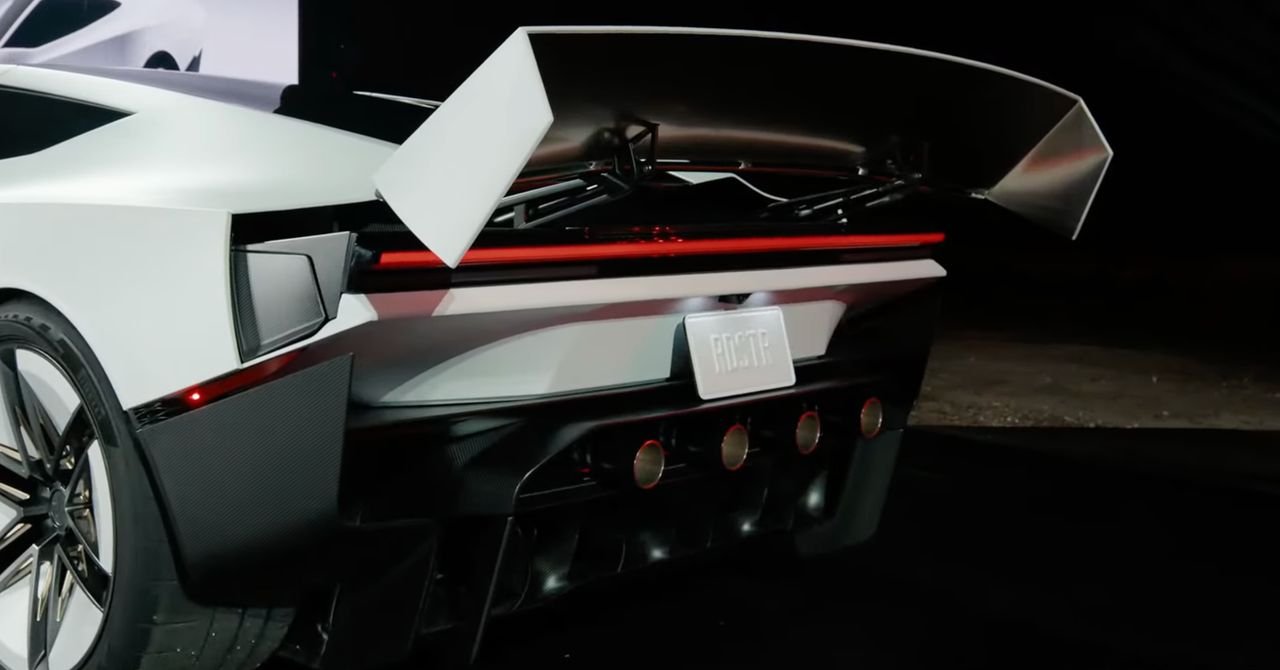
Flying Tesla Roadster 2 Revealed After Years of Delays
Tesla has officially pulled the curtain back on the Tesla Roadster 2, a vehicle that blurs the boundary between a supercar and a rocket. During a recent event in McGregor, Texas, the company demonstrated the car lifting several feet off the ground using integrated compressed gas thrusters. This long-awaited reveal confirms that the Tesla Roadster 2 will indeed feature flight-like capabilities, a feature Musk has teased since the initial announcement in 2017. It is clearly a machine built for enthusiasts who prioritize extreme performance over traditional automotive safety standards.
The Technology Behind the Tesla Roadster 2
Additionally, the integration of SpaceX technology into the Tesla Roadster 2 is the core differentiator for this platform. Lars Moravy, the head of vehicle engineering, explained that the gas-powered thrusters are essential for both vertical lift and lateral track performance. By providing extra downforce, the system is expected to help the car navigate corners at speeds that would otherwise be impossible for a street-legal vehicle. Moreover, the company is aiming for a top speed that could reach halfway to the speed of sound, significantly outpacing current Formula 1 standards.
Reservation Status and Future Production
Despite the excitement, the production timeline remains a point of contention for many observers. Tesla plans to start building the Tesla Roadster 2 in 2028, a date that follows years of missed targets and shifting product priorities. For instance, early depositors who paid $50,000 as far back as 2017 have faced significant hurdles in managing their reservations. Currently, the company has updated its booking system, requiring a $5,000 fee followed by a $45,000 payment within 10 days to secure a spot. You can find more details on Tesla’s official platform regarding the different variants.
Ultimately, the Tesla Roadster 2 is shaping up to be the most ambitious project in the company’s history. With three distinct versions planned, including a single-seat ‘Rocket’ variant, the vehicle is clearly targeting a niche high-end market. However, the true test will be whether the production version can replicate the stunts seen in Texas while remaining a viable, albeit extreme, machine for the road. For now, the automotive world is watching closely to see if this promise finally becomes a reality.
Tesla Roadster 2 Market Impact and Industry Significance
The introduction of Tesla Roadster 2 represents a pivotal shift in modern technological adoption across enterprise and consumer sectors alike. Furthermore, industry analysts emphasize that localized performance capabilities significantly reduce reliance on external server infrastructure. Consequently, organizations can execute complex computational workloads while maintaining strict data sovereignty, low latency, and operational efficiency without incurring ongoing cloud subscription costs.
Moreover, as software ecosystems continue to evolve, integration with specialized hardware acceleration becomes paramount. Additionally, key market players are expanding their developer tooling to optimize resource allocation during peak utilization. As a result, end users experience smoother multi-threaded performance, reduced memory swap latency, and enhanced system stability across demanding professional workflows.
Performance Benchmarks and Practical Tesla Roadster 2 Scenarios
In real-world deployment scenarios, evaluating sustained throughput and thermal efficiency is essential for technical decision-makers. Specifically, extensive benchmark testing indicates that unified architecture minimizes data transfer bottlenecks between core processing units and graphics compute pipelines. Therefore, demanding tasks operate with minimal compute overhead.
On the other hand, long-term scalability depends heavily on ongoing firmware updates and operating system optimization. Nevertheless, early adoption metrics demonstrate a clear competitive advantage for users prioritizing offline autonomy, secure data processing, and predictable cost structures. Ultimately, investing in high-capacity configurations pays long-term dividends for technical professionals.

1 Comment
Pingback: Vivo Pad FE Charging Specs Revealed in Regulatory Filing