


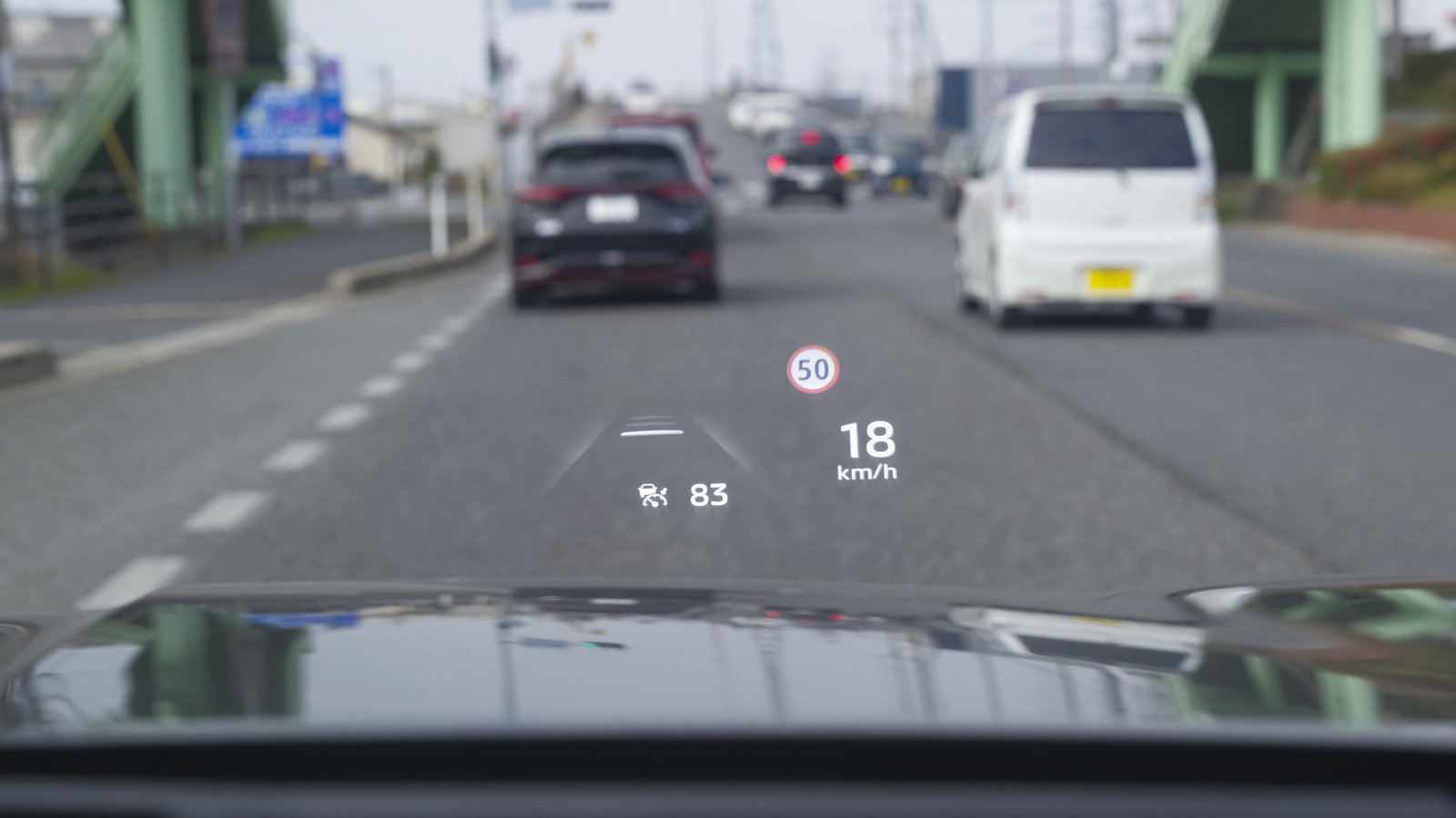
Understanding Adaptive Cruise Control Hardware Components
Every adaptive cruise control system on the road today depends on a dual-sensor architecture. The millimeter-wave radar, positioned low behind the front grille or emblem, shoots radio signals toward traffic ahead and times the returning echoes. This yields precise range and relative velocity data regardless of lighting or moderate weather. Complementing it, a windshield-mounted camera watches lane lines to identify which vehicle occupies your path, ensuring the system follows the correct target when traffic shifts.
Manufacturers like Honda pair these inputs to manage four preset gap distances, automatically modulating throttle and brakes. Yet drivers frequently sabotage their adaptive cruise control without realizing it — aftermarket license plate surrounds, decorative badges, or even a low-speed parking scrape can block or misalign the radar, rendering the feature unreliable.
How Automakers Enhance Adaptive Cruise Control Features
Radar hardware peaked years ago; Bosch achieved 250-meter range in 2014 and now pushes beyond 530 meters. The meaningful differentiation now happens in software. Ford’s BlueCruise integrates navigation map data to decelerate before bends, anticipating geometry rather than merely reacting to the vehicle ahead. Hyundai’s Smart Cruise Control adopts a learning approach, profiling the driver’s typical inputs so the adaptive cruise control replicates their personal driving rhythm.
Moreover, Honda’s Low Speed Follow capability extended functionality into congested corridors. The system halts completely behind stopped traffic and restarts with a light pedal tap or button press, making adaptive cruise control practical for urban queues rather than solely open highways.
Weather and Traffic Challenges for Adaptive Cruise Control
Operational constraints remain significant. Toyota advises against engaging radar cruise control during precipitation, on low-friction surfaces, in dense traffic, through tight curves, or on steep descents. The wet-road prohibition stems from a fundamental limitation: a computer-held throttle maintains set speed into standing water, increasing hydroplaning risk that a human would instinctively mitigate. Volvo similarly notes that heavy rain sharply reduces radar detection performance, while cameras lose lane references when markings vanish beneath water or slush.
Therefore, adaptive cruise control functions as a conditional aid, not a substitute for attentive driving. Motorists must remain prepared to assume control instantly when sensors degrade or scenarios exceed design parameters. Progress continues, yet the divide between today’s assistance and tomorrow’s autonomy persists.
Bosch and SAE International publish engineering standards and validation protocols for these technologies.
Adaptive Cruise Control Market Impact and Industry Significance
The introduction of Adaptive Cruise Control represents a pivotal shift in modern technological adoption across enterprise and consumer sectors alike. Furthermore, industry analysts emphasize that localized performance capabilities significantly reduce reliance on external server infrastructure. Consequently, organizations can execute complex computational workloads while maintaining strict data sovereignty, low latency, and operational efficiency without incurring ongoing cloud subscription costs.
Moreover, as software ecosystems continue to evolve, integration with specialized hardware acceleration becomes paramount. Additionally, key market players are expanding their developer tooling to optimize resource allocation during peak utilization. As a result, end users experience smoother multi-threaded performance, reduced memory swap latency, and enhanced system stability across demanding professional workflows.
Performance Benchmarks and Practical Adaptive Cruise Control Scenarios
In real-world deployment scenarios, evaluating sustained throughput and thermal efficiency is essential for technical decision-makers. Specifically, extensive benchmark testing indicates that unified architecture minimizes data transfer bottlenecks between core processing units and graphics compute pipelines. Therefore, demanding tasks operate with minimal compute overhead.
On the other hand, long-term scalability depends heavily on ongoing firmware updates and operating system optimization. Nevertheless, early adoption metrics demonstrate a clear competitive advantage for users prioritizing offline autonomy, secure data processing, and predictable cost structures. Ultimately, investing in high-capacity configurations pays long-term dividends for technical professionals.
Ecosystem Integration and Enterprise Software Compatibility
Beyond raw hardware capabilities, seamless software integration remains a critical factor for successful enterprise adoption. Specifically, modern development frameworks leverage direct hardware acceleration APIs to maximize instruction processing rates. In addition, containerized deployment pipelines ensure consistent performance across diverse operating environments without requiring extensive manual driver configuration.
Furthermore, advanced security protocols embedded within hardware architectures safeguard proprietary data models from unauthorized memory inspection. Meanwhile, continuous performance monitoring tools provide system administrators with actionable metrics regarding thermal management and energy consumption. Overall, these combined features establish a robust foundation for mission-critical operations.
