


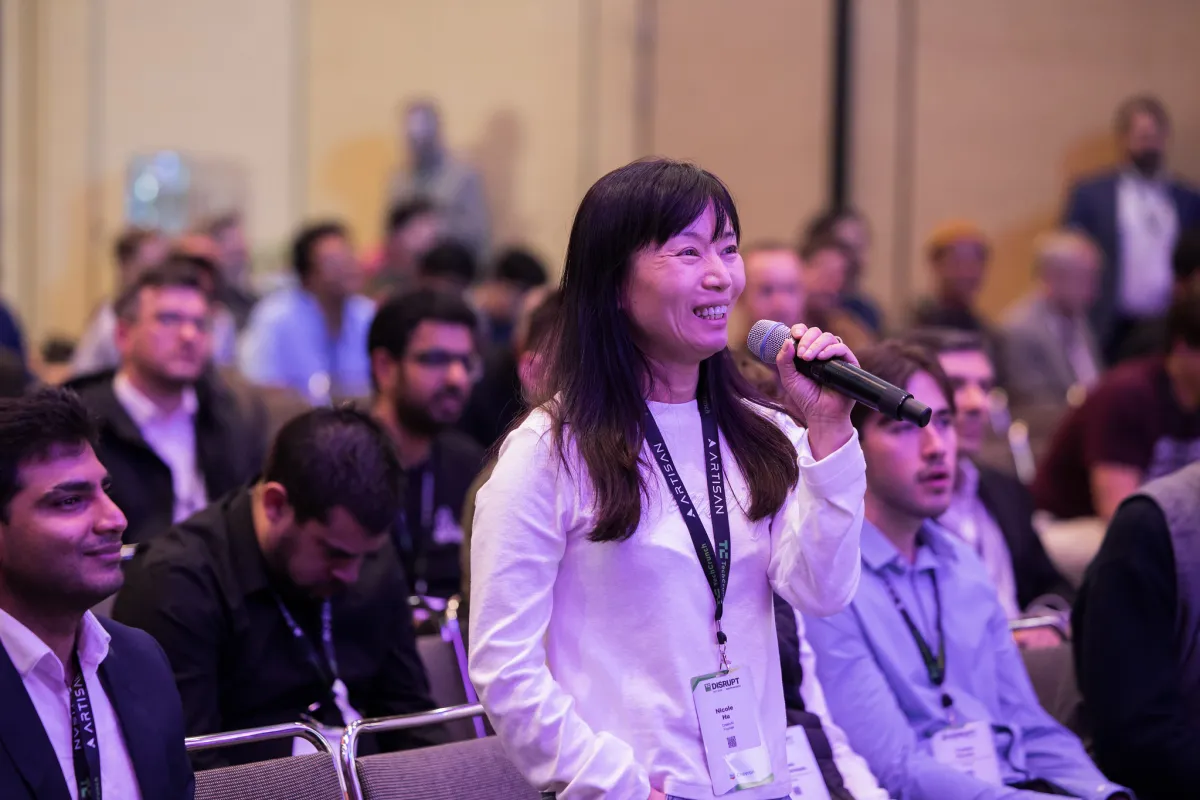
TechCrunch Disrupt 2026 Puts AI-Era Company Building First
TechCrunch Disrupt 2026 arrives at San Francisco’s Moscone West from October 13 to 15, and its organizers have framed the entire event around a single question: how do you build an enduring company in the AI era? Consequently, the programming, speaker roster, and networking formats all bend toward that problem rather than toward predictions about what artificial intelligence might do next.
Furthermore, the conference was assembled from community feedback and what TechCrunch calls the reality on the ground — the practical concerns of founders who are raising, hiring, and shipping right now rather than theorizing.
What Founders Actually Take Home From TechCrunch Disrupt 2026
Evidence from previous editions suggests the returns are concrete. One founder reported a 3x oversubscription rate after confirming a Startup Battlefield slot, along with more than 100 investor inbounds that fueled talks about a future round. Another left a stage pitch with roughly 30 back-to-back investor meetings after the audience followed them to their booth.
However, those outcomes are not reserved for Battlefield finalists. According to organizers, every exchange in the Expo Hall or at a Side Event can turn into a lead. Therefore the event’s value compounds through proximity — being in the same room as the person who changes a startup’s trajectory.
Six Stages, Two Hundred Sessions, One Practical Question
Across six editorially curated stages, more than 200 expert sessions will cover fundraising, team scaling, and product decisions reshaped by AI. Specifically, each talk answers a version of the same prompt: what can a founder take back to the company on Monday morning?
Additionally, the agenda splits into tracks based on where a founder sits in their journey — first round, growth stage, or a full rethink of the product roadmap. First-time attendees, for instance, can follow a beginner path that maps three packed days into manageable blocks, while repeat visitors often skip the main stage entirely and work the hallways instead.
Tickets and Discounts for TechCrunch Disrupt 2026
Two promotions run until the event begins. Founders can bring a teammate at 50% off a standard pass, and a steeply discounted Expo+ ticket is available for recently laid-off members of their network. Moreover, passes carry a $100 savings window that closes once the doors open.
Overall, the pitch for TechCrunch Disrupt 2026 is straightforward: the publication has covered startups for more than two decades, and Disrupt remains its largest in-person gathering of founders, investors, and operators. Meanwhile, skepticism about conference value is fair — the counterargument is that a single introduction can outweigh three days of talks. For instance, past attendees have closed funding conversations that began as casual hallway chats.
The Bottom Line for Founders Weighing the Trip
Ultimately, this year’s Disrupt is less a forecast and more a working session for people already building. As a result, founders deciding whether to attend should weigh the cost against one realistic outcome: a conversation that reshapes their next quarter.
Details and registration live on the official Disrupt event page, and the wider schedule sits alongside TechCrunch’s startup coverage.
Techcrunch Disrupt 2026 Market Impact and Industry Significance
The introduction of Techcrunch Disrupt 2026 represents a pivotal shift in modern technological adoption across enterprise and consumer sectors alike. Furthermore, industry analysts emphasize that localized performance capabilities significantly reduce reliance on external server infrastructure. Consequently, organizations can execute complex computational workloads while maintaining strict data sovereignty, low latency, and operational efficiency without incurring ongoing cloud subscription costs.
Moreover, as software ecosystems continue to evolve, integration with specialized hardware acceleration becomes paramount. Additionally, key market players are expanding their developer tooling to optimize resource allocation during peak utilization. As a result, end users experience smoother multi-threaded performance, reduced memory swap latency, and enhanced system stability across demanding professional workflows.
Performance Benchmarks and Practical Techcrunch Disrupt 2026 Scenarios
In real-world deployment scenarios, evaluating sustained throughput and thermal efficiency is essential for technical decision-makers. Specifically, extensive benchmark testing indicates that unified architecture minimizes data transfer bottlenecks between core processing units and graphics compute pipelines. Therefore, demanding tasks operate with minimal compute overhead.
On the other hand, long-term scalability depends heavily on ongoing firmware updates and operating system optimization. Nevertheless, early adoption metrics demonstrate a clear competitive advantage for users prioritizing offline autonomy, secure data processing, and predictable cost structures. Ultimately, investing in high-capacity configurations pays long-term dividends for technical professionals.
