


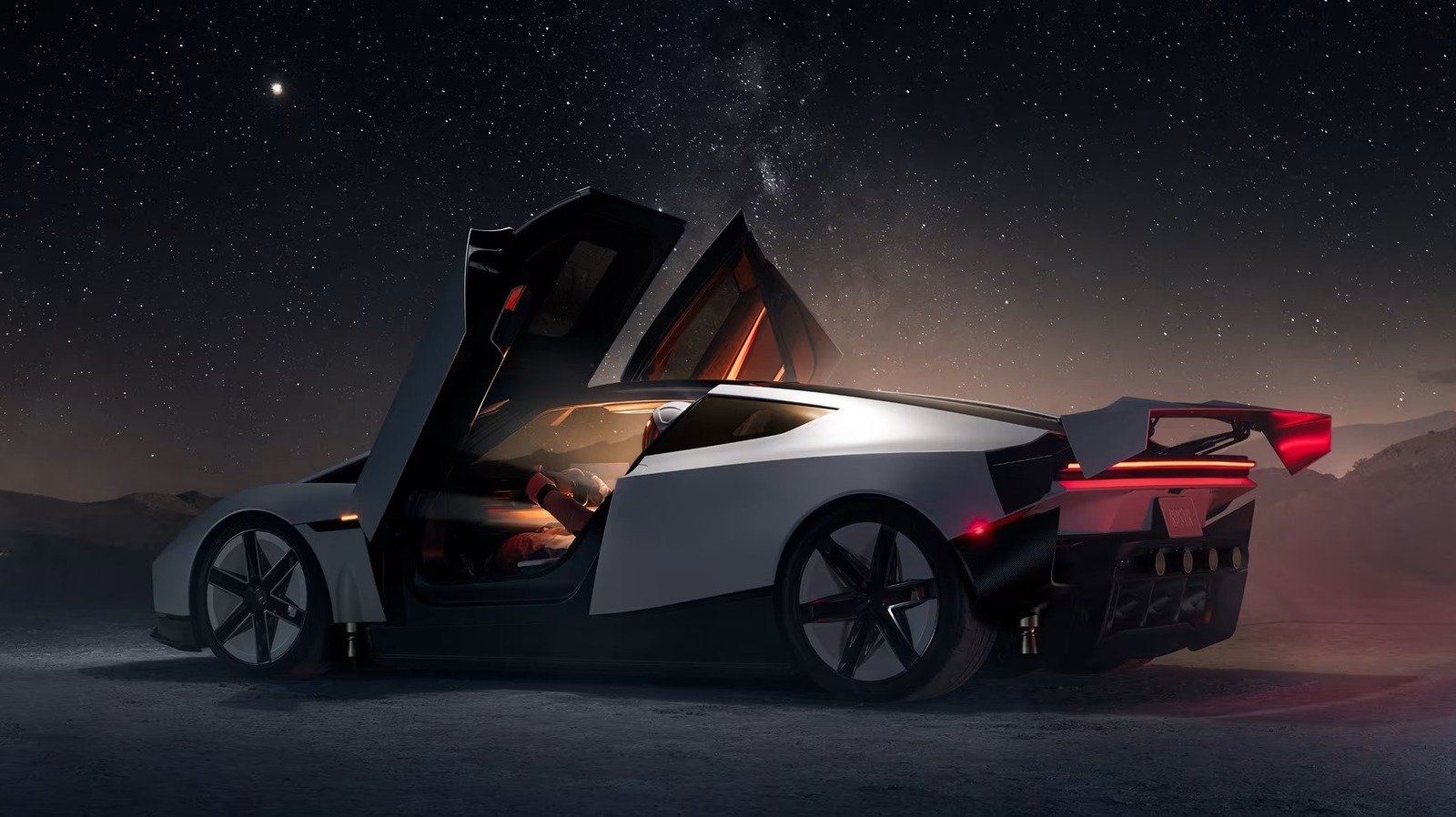
Tesla Roadster Production Targets 2028 After Long Delay
Tesla has officially set a 2028 production date for the much-anticipated Tesla Roadster. This announcement comes after a high-octane demonstration where the vehicle maneuvered upside down on a specialized ramp. Although the stunt generated significant excitement, the recurring history of delays involving the Tesla Roadster suggests that consumers should maintain a healthy dose of caution. Musk firmly emphasized that the 2028 date is the real deal, attempting to put past scheduling failures behind the brand.
Since its first reveal in November 2017, the Tesla Roadster has become something of a mythical project within the automotive industry. Initially marketed as a ‘hardcore smackdown’ to gasoline-powered supercars, the vehicle was originally slated for a 2020 launch. However, global supply chain issues and changing internal priorities at Tesla pushed the timeline back repeatedly. Furthermore, the company shifted its focus toward the Cybertruck, which took precedence in the manufacturing pipeline. As a result, the sports car has remained in a state of perpetual development.
The Future of the Tesla Roadster
Technical ambitions for the Tesla Roadster are arguably higher than any other vehicle in the company’s lineup. The inclusion of rocket thrusters for enhanced cornering and speed requires complex engineering that exceeds standard automotive manufacturing. Moreover, the ‘Thrust’ trim level, which commands a $250,000 reservation fee, highlights the premium nature of this endeavor. If Tesla manages to deliver the vehicle as described, it would certainly redefine the performance benchmarks for electric vehicles.
Additionally, the legacy of the original 2008 sports car continues to influence the brand’s identity. That early model was pivotal in proving that battery-powered vehicles could be both fast and desirable. Today, the Tesla Roadster seeks to recapture that initial spark of innovation. Nevertheless, the road to 2028 remains long and uncertain. Whether the company can navigate these engineering hurdles will determine the ultimate legacy of this vehicle. For more updates on electric vehicle breakthroughs, visit Reuters Automotive for broader industry context.
Tesla Roadster Market Impact and Industry Significance
The introduction of Tesla Roadster represents a pivotal shift in modern technological adoption across enterprise and consumer sectors alike. Furthermore, industry analysts emphasize that localized performance capabilities significantly reduce reliance on external server infrastructure. Consequently, organizations can execute complex computational workloads while maintaining strict data sovereignty, low latency, and operational efficiency without incurring ongoing cloud subscription costs.
Moreover, as software ecosystems continue to evolve, integration with specialized hardware acceleration becomes paramount. Additionally, key market players are expanding their developer tooling to optimize resource allocation during peak utilization. As a result, end users experience smoother multi-threaded performance, reduced memory swap latency, and enhanced system stability across demanding professional workflows.
Performance Benchmarks and Practical Tesla Roadster Scenarios
In real-world deployment scenarios, evaluating sustained throughput and thermal efficiency is essential for technical decision-makers. Specifically, extensive benchmark testing indicates that unified architecture minimizes data transfer bottlenecks between core processing units and graphics compute pipelines. Therefore, demanding tasks operate with minimal compute overhead.
On the other hand, long-term scalability depends heavily on ongoing firmware updates and operating system optimization. Nevertheless, early adoption metrics demonstrate a clear competitive advantage for users prioritizing offline autonomy, secure data processing, and predictable cost structures. Ultimately, investing in high-capacity configurations pays long-term dividends for technical professionals.
